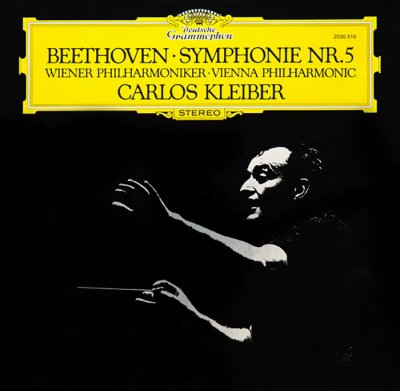
Carlos Kleiber
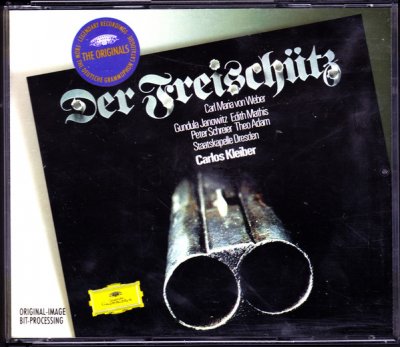
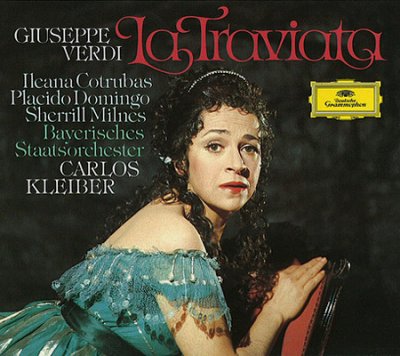
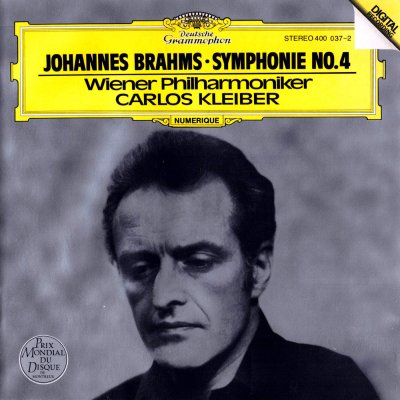
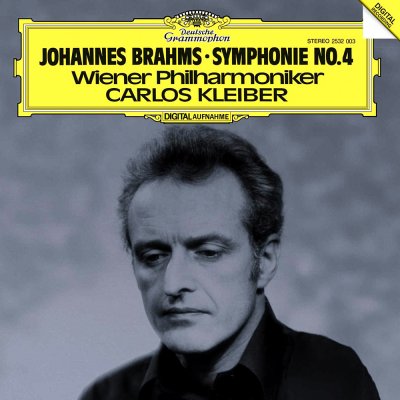
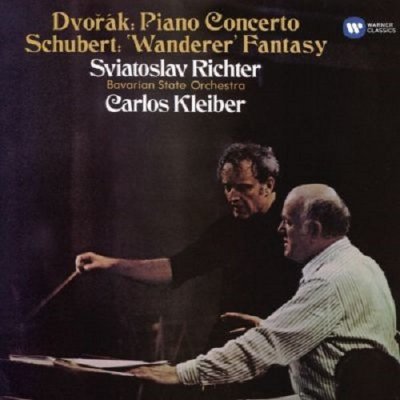
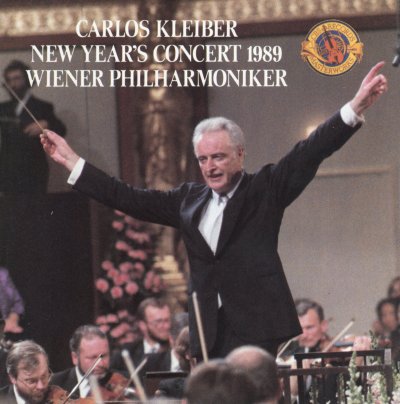
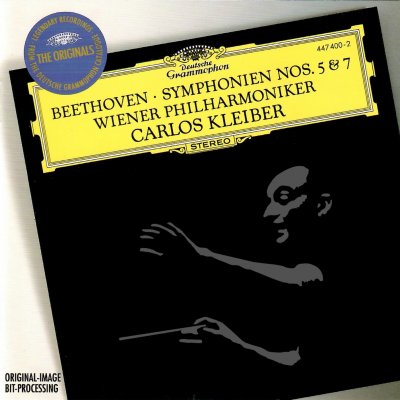
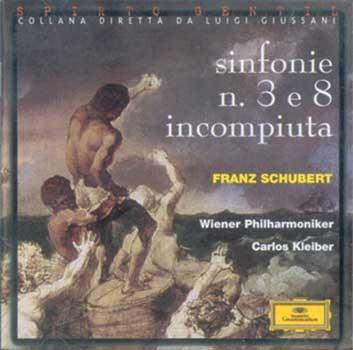
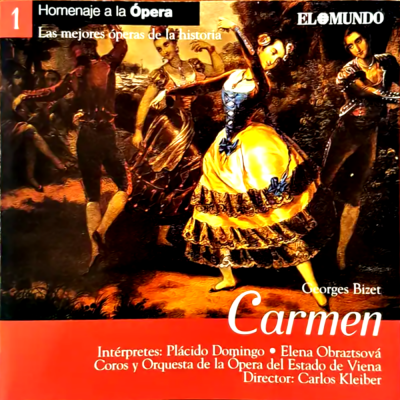
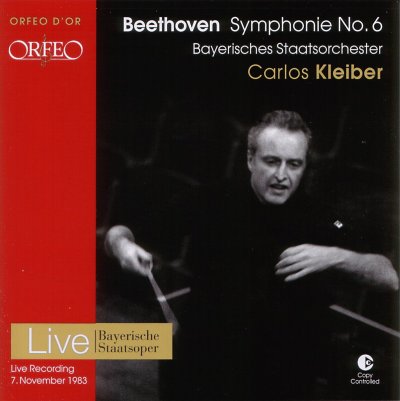
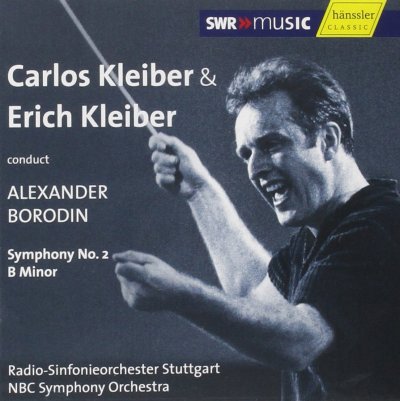
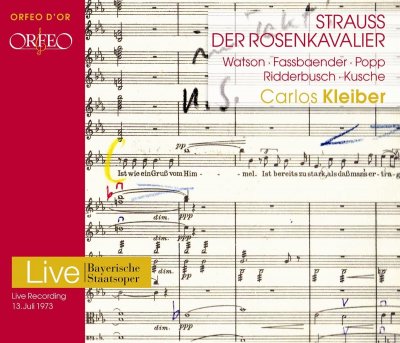
Carlos Kleiber (3 July 1930 – 13 July 2004) was a German-born Austrian conductor whom some rank among the greatest of the 20th century. Kleiber was born as Karl Ludwig Bonifacius Kleiber in Berlin, the son of at least as eminent Austrian conductor Erich Kleiber and Jewish-American Ruth Goodrich, from Waterloo, Iowa. In 1940, the Kleiber family emigrated to Buenos Aires and Karl was renamed Carlos. As a youth, he had an English governess and grew up in English boarding schools. He also composed, sang, and played piano and timpani. While his father noticed his son's musical talents, he nevertheless dissuaded Carlos from pursuing a musical career: "What a pity the boy is musically talented", wrote Erich to a friend. Carlos first studied chemistry in Zurich, but soon decided to dedicate himself to music. He was repetiteur at the Gärtnerplatz Theatre in Munich in 1952, and made his conducting debut with the operetta Gasparone at Potsdam theatre in 1954. From 1958 to 1964 he was Kapellmeister at the Deutsche Oper am Rhein in Düsseldorf and Duisburg, and then at the Opera in Zurich from 1964 to 1966. Between 1966 and 1973 he was first Kapellmeister in Stuttgart, his last permanent post. During the following years, he often conducted at the Bavarian State Opera in Munich. During his freelance career, Kleiber restricted his conducting appearances to a select number of occasions. He made his British debut in 1966 with a performance at the Edinburgh Festival of Alban Berg's opera Wozzeck, a work whose premiere his father had conducted in 1925. He made his Bayreuth debut in 1974 conducting Richard Wagner's Tristan und Isolde. His American debut came in 1978 with the Chicago Symphony Orchestra, where he again conducted in 1983, his only US orchestra appearances. His New York Metropolitan Opera debut was in 1988, conducting Giacomo Puccini's La bohème with Luciano Pavarotti and Mirella Freni. In 1989, following Herbert von Karajan's resignation from the Berlin Philharmonic Orchestra, Kleiber was offered, and declined, the opportunity to succeed him as music director. Kleiber returned to the Met in 1989 to conduct La traviata, and in 1990 for Otello and Der Rosenkavalier. Kleiber kept out of the public eye, and reportedly never gave an interview. After he resigned from the Bavarian State Opera, his appearances became less frequent and he made only a few recordings. Most of these are highly regarded; his versions of Ludwig van Beethoven's fifth and seventh symphonies with the Vienna Philharmonic Orchestra and of Beethoven's Symphonies Nos. 4, 6 and 7 with the Bavarian State Orchestra are particularly distinguished. Other notable recordings include Johannes Brahms' Symphony No. 4 and Franz Schubert's third and eighth ("Unfinished") symphonies, also with the Vienna Philharmonic, recordings of Dvořák's Concerto for piano and orchestra with Sviatoslav Richter, Carl Maria von Weber's Der Freischütz, Johann Strauss' Die Fledermaus and Giuseppe Verdi's La Traviata. His last studio recording was Richard Wagner's Tristan und Isolde with the Staatskapelle Dresden. Recording sessions began in 1980 but Kleiber left before they were completed. However as a musically complete performance had been set down, Deutsche Grammophon went ahead and released it, much to Kleiber's anger. Kleiber's unique conducting style is preserved on video in a number of performances: Beethoven's Symphony No. 4 and Symphony No. 7 from the Concertgebouw in Amsterdam, Johann Strauss' Die Fledermaus from Munich, Richard Strauss' Der Rosenkavalier from both Munich and Vienna, Wolfgang Amadeus Mozart's 36th symphony and Brahms' second symphony from the Musikverein in Vienna ; Beethoven's Coriolan Overture, Mozart's 33rd and Brahms' fourth symphonies from Munich and Bizet's Carmen again from Vienna. He led the New Year's Concert of the Vienna Philharmonic in 1989 and 1992, and these are both preserved on video. Kleiber effectively retired from concert life in the early 1990s, occasionally reappearing for private or benefit concerts. For one such event in Ingolstadt, instead of the usual fee, he received a new Audi made to his specifications. His performances were meticulously rehearsed, but often seemed spontaneous and inspired. In the opinion of many of his colleagues and audiences, he was an eccentric genius whom some placed among the greatest conductors of all time despite the paucity of his appearances. He was buried in the Slovenian village of Konjšica near Litija in 2004 together with his wife Stanislava Brezovar, a ballet dancer, who had died seven months earlier. They had two children, a son Marko and a daughter Lillian. In 2008 Rai Radio 3 (Italian National Radio channel 3), inside its evening program Radio3Suite, broadcast a 10-episode program dedicated to Kleiber's legacy: Il Sorriso della Musica: un Ritratto di Carlos Kleiber ("The Smile Of Music: A Portrait Of Carlos Kleiber"), organized and hosted by Andrea Ottonello, with participation by Claudio Abbado, Mirella Freni, Maurizio Pollini, and above all Carlos Kleiber's sister, Veronica. In his interview, Abbado termed Kleiber "one of the greatest, if not the greatest, conductors of the 20th century" ("Carlos è stato uno dei più grandi, se non il più grande, direttore del Novecento.") On 26 September 2009, BBC Radio 3 transmitted a unique documentary, Who Was Carlos Kleiber?. Produced by Paul Frankl and presented by Ivan Hewett with research by Ruth Thomson, this feature was based on interviews with four who knew Kleiber well: tenor and conductor Plácido Domingo, music administrator and intendant Sir Peter Jonas, music journalist and critic Christine Lemke-Matvey and conductor–pianist Charles Barber. A transcription of the program is available at http://www.carlos-kleiber.com/resources. On 21 June 2010, Ljubljana celebrated Carlos Kleiber's 80th birthday with a concert by the Vienna Philharmonic Orchestra directed by Kleiber's friend Riccardo Muti. BBC Music Magazine, one of the more popular of such journals, announced on 17 March 2011 that Kleiber had been selected as "the greatest conductor of all time." Some 100 current conductors, including Sir Colin Davis, Gustavo Dudamel, Valery Gergiev and Mariss Jansons, participated in the BBC poll. Kleiber, who conducted just 96 concerts and around 400 operatic performances in his 74 years, was voted ahead of Leonard Bernstein and Claudio Abbado, who took second and third places respectively. Susanna Mälkki, Music director, Ensemble Intercontemporain, and one of the conductors polled, commented: "Carlos Kleiber brought an incredible energy to music… Yes, he did have about five times as much time to rehearse than conductors do today, but he deserved it because his vision was remarkable, he knew what he wanted, and his attention to detail was truly inspiring." Jeremy Pound, Deputy Editor of BBC Music Magazine, added: "Asking 100 of today's conducting greats to name their idols and inspirations was a fascinating experience. Not least when so many named Carlos Kleiber, who in the course of his whole lifetime conducted fewer concerts than most of them direct in just a couple of years. Kleiber's incredible attention to detail, sheer enthusiasm for music, and astonishingly accomplished level of performance could never be doubted – perhaps 'less is more' is the real path to true greatness?" According to Dr Charles Barber, biographer, friend and pen-pal of Kleiber, another factor contributed to his legendary and unusual career. "Uniquely, Carlos Kleiber combined the rigors of German analysis, form and discipline with the expressive vitality of Latin dance, pulse and joy. For nearly twenty years at the formative outset, a conductor baptized Karl gradually became Carlos. He never turned his back on that fascinating cultural biochemistry. It would shape everything he did." Kleiber was voted into the Gramophone Hall of Fame in 2012. Clemens Hellsberg (Gramophone magazine, May 2012) said: "What was it that propelled Carlos Kleiber to near mystical heights? It was the unforgettable experience of surpassing one's own boundaries, yet also the utter helplessness when he stormed off in the last minutes of a final rehearsal. This was not pretension but rather the expression of deepest despair, even though the orchestra had performed at the highest level - or perhaps for that very reason. Extreme contradictions characterised his personality: one constantly feared catastrophe, yet he was always available to musicians for private conversations. He had a vast repertoire, yet restricted himself to a very few works. His outbursts of rage could be directed at anyone, yet his interaction with children was characterised by a precious and fragile tenderness. In art there are no upward limits. Yet each generation needs at least one artist who exemplifies this. Kleiber reached to the stars for us; even when he broke down in his efforts, he still proved that they exist".
Discography
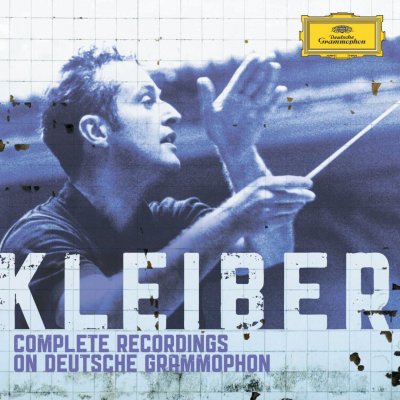
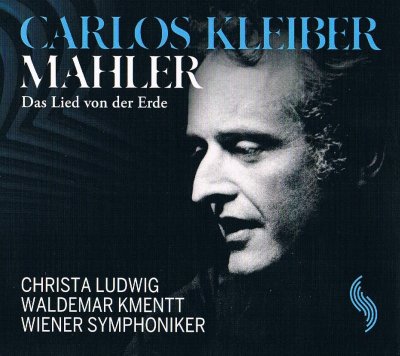
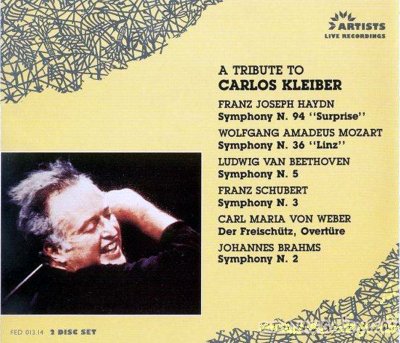
Credits