music.nwby NeuraWeb Global Inc.
~13.0M artists · ~39.4M recordings indexed
Narrow to
CO
Person · composer

Carl Orff

Albums
272
Members
0
Active
1895–1982
Origin
Germany
Biography

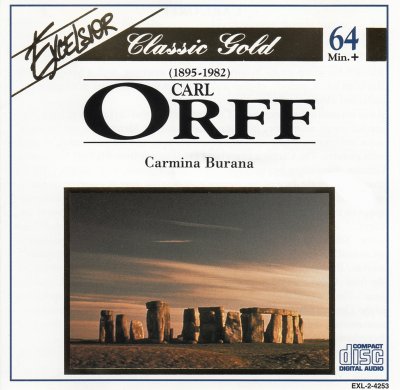
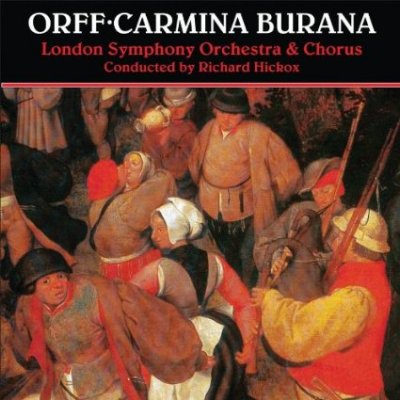
Although his fame rests on the success of a single work, the famous and frequently commercially mutilated Carmina Burana, Carl Orff was in fact a multi-faceted musician and prolific composer who wrote in many styles before developing the primal, driving language which informs his most famous work. In addition to his fame as the creator of Carmina burana, Orff enjoyed international renown as the world's pre-eminent authority on children's music education, his life's work in that area represented by Musik für Kinder, five eclectic collections of music to be performed by children, eventually developing into a more extensive series known as Orff Schulwerk. Born in 1895 to an old Bavarian family, Orff studied piano and cello while still a young boy. He later studied at the Munich Academy of Music, graduating in 1914. The music that he composed during this period shows the influence of several composers, including Debussy and Richard Strauss. In 1914, Orff was appointed Kapellmeister at the Munich Kammerspiele, where he remained until joining the military in 1917. Discharged from service the following year, Orff continued to work as a conductor, accepting further positions in Mannheim and Darmstadt during the 1918-1919 seasons. Returning to Munich in 1919, Orff studied composition privately with Heinrich Kaminski while supporting himself as a teacher. In 1924, he founded the Güntherschule for music and dance with Dorothee Günther, dedicating himself to making musical performance accessible to children. Under his guidance, an entire orchestra of special "Orff instruments" was designed, enabling children to play music without formal training. The following year, Orff made three stage adaptations of works by Monteverdi. Continuing his work in the area of Baroque music, Orff became conductor of the Munich Bach society in 1930, a position he held until 1933. The experience of performing Baroque music, particularly sacred works for the stage, convinced Orff that an effective musical performance must fuse music, words and movement, a goal no doubt partly inspired by his work with the Güntherschule. Orff embodied his conception of music in the fabulously successful Carmina Burana (1937), which in many ways defined him as a composer. Based on an important collection of Latin and German Goliard poems found in the monastery of Benediktbeuren, this work exemplifies Orff's search for an idiom that would reveal the elemental power of music, allowing the listener to experience music as an overwhelming, primitive force. Goliard poetry, which not only celebrates love and wine, but also pokes fun at the clergy, perfectly suited Orff's desire to create a musical work appealing to a fundamental musicality that, as he believed, every human being possesses. Eschewing melodic development and harmonic complexity, and articulating his musical ideas through basic sonorities and easily discernible rhythmic patterns, Orff created an idiom which many found irresistible. The perceived "primitivism" of Carmina burana notwithstanding, Orff believed that the profound appeal of music is not merely physical. This belief is reflected by many other works, including musical dramas based on Greek tragedies, namely, Antigonae (1949), Oedipus der Tyrann (1959), and Prometheus (1966). These works, as well as some compositions on Christian themes, followed the composer's established dramatic and compositional techniques, but failed to repeat the tremendous success of Carmina burana. His last work, De temporum fine comoedia (A Comedy About the End of Time) premiered at the 1973 Salzburg Festival. Nine years later, Carl Orff died in Munich, where he had spent his entire life.

Discography
Catulli Carmina
Carl Orff · —
Catulli Carmina (Ludi Scaenici)
Carl Orff · —
Catulli Carmina / Thriumph of Aphrodite
Carl Orff · —
Comoedia De Christi Resurrectione (Ein Osterspiel)
Carl Orff · —
Der Mond / Ein Kleines Welttheater / Neufassung 1970
Carl Orff · —
Die Bernauerin
Carl Orff · —
Die Jahreszeiten (In Liedern Und Tänzen Aus Musica Poetica - Orff-Schulwerk)
Carl Orff · —
Die Kluge - Die Geschichte Mit Dem König Und Der Klugen Frau
Carl Orff · —
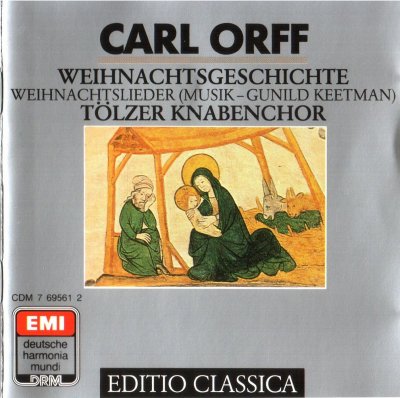
Die Weihnachtsgeschichte
Carl Orff · —
Frühlingsbeginn - Sommergewinn
Carl Orff · —
Guten Morgen, Spielmann
Carl Orff · —
Kerstspel
Carl Orff · —
Kinderlieder, Spiele, Reime (Musica Poetica - Orff-Schulwerk)
Carl Orff · —
La Ronde Des Animaux 1 (Chansons, Comptines & Poèmes)
Carl Orff · —
La Ronde Des Métiers
Carl Orff · —
Ludus De Nato Infante Mirificus - Ein Weihnachtsspiel
Carl Orff · —
Magie Und Rhythmus
Carl Orff · —
Musica Poetica Teil 10 - Orff Schulwerk - Sprechszenen, Laudi, Balladen
Carl Orff · —
Musica Poetica Teil 1 - Orff-Schulwerk - Spiellieder, Rufe, Reime
Carl Orff · —
Musikalisches Hausbuch
Carl Orff · —
Album cover
OC 828: Vom Himmel hoch, o Englein kommt
Carl Orff · —
Oedipus der Tyrann
Carl Orff · —
Orff-Schulwerk - Musik Für Kinder Teil II
Carl Orff · —
Orff Schulwerk: Musik Für Kinder, Teil I Und 2
Carl Orff · —
Reprise O Fortuna From "Carmina Burana" (Fortuna Imperatrix Mundi)
Carl Orff · —
Rondes & Comptines 1
Carl Orff · —
Rondes & Comptines, Volume 2
Carl Orff · —
Schostakowitsch: The Gadfly / Prokofjew: Alexander Newski / Orff: Carmina Burana
Carl Orff · —
Tournois & Troubadours
Carl Orff · —
Album cover
Weihnachtsgeschichte / Weihnachtslieder
Carl Orff · —
Weihnachtsgeschichte, Weihnachtslieder
Carl Orff · —
Умница / Симфониетта
Carl Orff · —

Credits

Choral Works
Composer · 2019
BBC Music, Volume 25, Number 4: Carmina Burana
Composer · 2016
Album cover
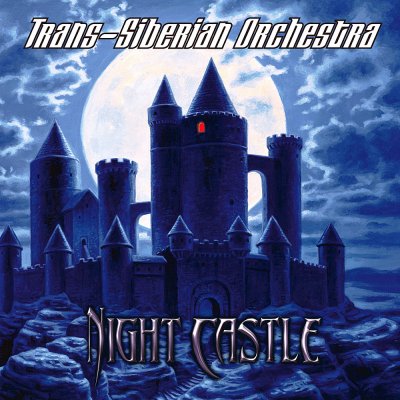
Night Castle
Composer · 2009
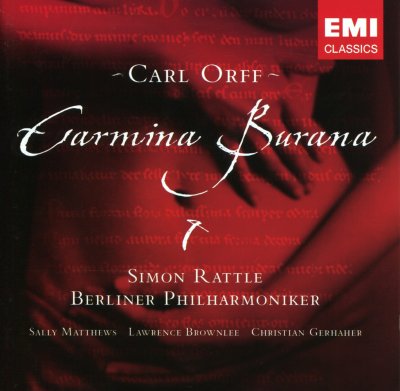
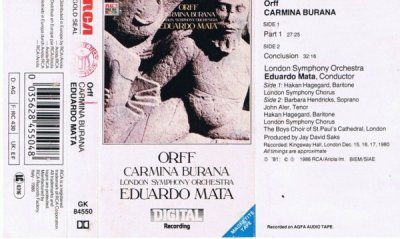
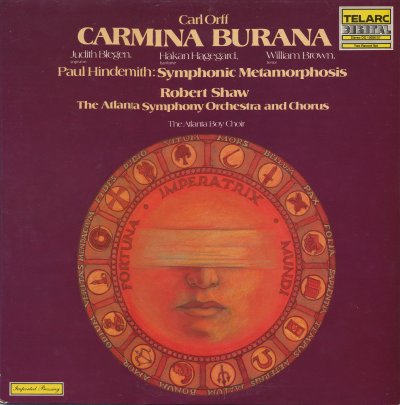
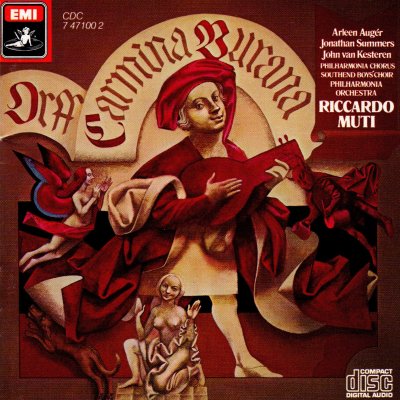
Carmina Burana
Composer · 2007
Album cover
Carmina Burana
Composer · 2004
Nocturne Voices
Composer · 2004
Radio Ixtlan
Writer · 2004
The Very Best of Era
Lyricist · 2004
Album cover
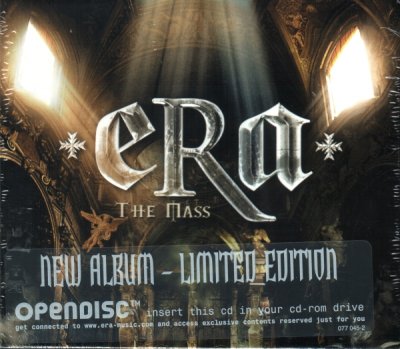
The Mass
Composer · 2003
Album cover
Carmina Burana
Composer · 2000
Deggial
Writer · 2000
Album cover
The Screen Behind the Mirror
Composer · 2000
Carmina Burana
Composer · 1999
Gravity of Love
Composer · 1999
Die Kluge / Der Mond
Composer · 1998
James Last & Friends
Arranger · 1998
Carmina Burana
Composer · 1997
Album cover
7
Performer · 1996
Carmina Burana
Composer · 1996
The John Birch Conspiracy Theory
Writer · 1996
Carmina Burana
Composer · 1995
Album cover
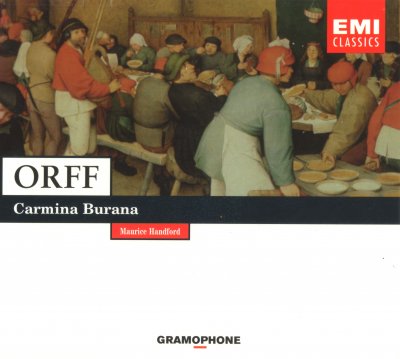
Carmina Burana
Composer · 1994
Carmina Burana
Composer · 1994
Carmina Burana
Composer · 1994
Carmina Burana
Composer · 1994
Album cover
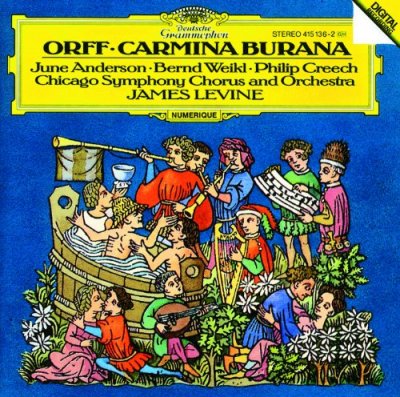
Carmina Burana
Composer · 1993
Album cover
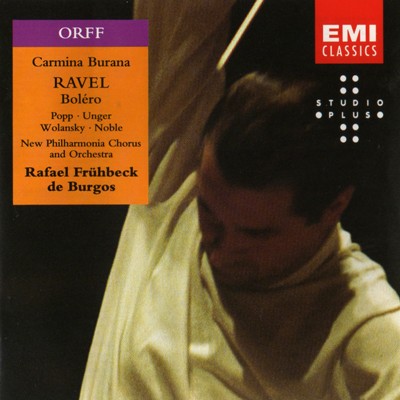
Orff: Carmina Burana / Ravel: Boléro
Composer · 1992
Album cover
Carmina Burana
Composer · 1991
Carmina Burana
Composer · 1991
Album cover
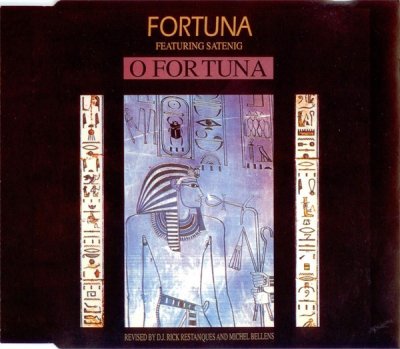
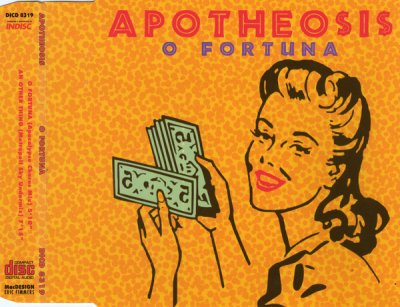
O Fortuna
Writer · 1991
Album cover
O Fortuna
Writer · 1991
Album cover
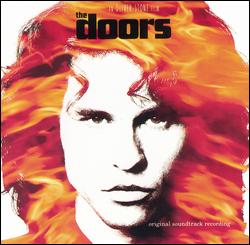
The Doors: Music From The Original Motion Picture
Writer · 1991
Carmina Burana
Composer · 1989
Carmina Burana
Composer · 1989
Album cover
Carmina Burana
Composer · 1989
Carmina Burana
Composer · 1987
Album cover
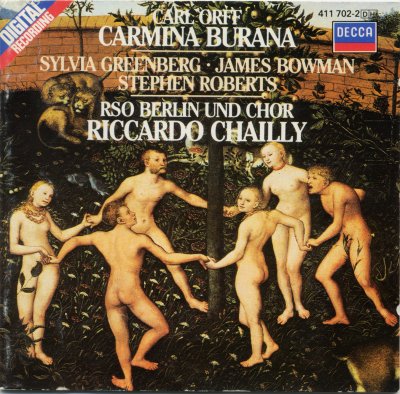
Carmina Burana
Composer · 1987
Album cover
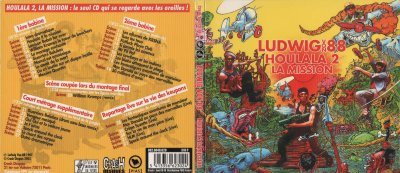
Houlala 2, la mission
Writer · 1987
Album cover
Carmina Burana
Composer · 1985
Carmina Burana
Composer · 1984
Album cover
Carmina Burana
Composer · 1984
Liquid Sky
Composer · 1983
Album cover
Carmina Burana
Composer · 1982
Album cover
Carmina Burana
Composer · 1981
Album cover
Carmina Burana
Composer · 1981
Album cover
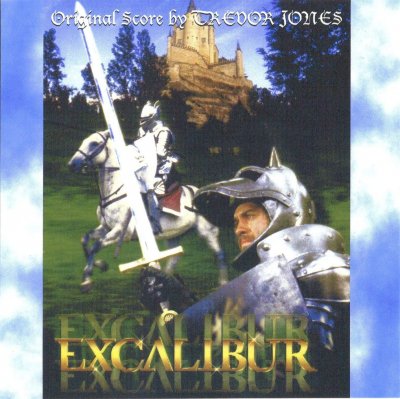
Excalibur
Composer · 1981
Album cover
Carmina Burana
Composer · 1980
Carmina Burana
Composer · 1976
Album cover
Carmina Burana
Writer · 1975
Album cover
Carmina Burana
Writer · 1975
Album cover
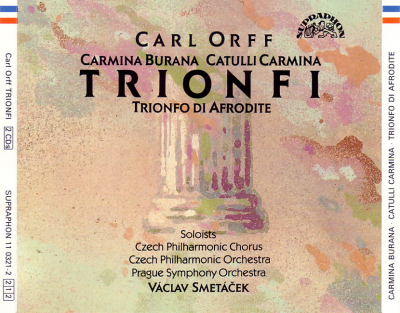
Trionfi: Carmina Burana / Catulli Carmina / Trionfo di Afrodite
Composer · 1975
Trionfi: Carmina Burana / Trionfo di Afrodite / Catulli Carmina
Composer · 1975
Carmina Burana
Composer · 1974
Carmina Burana
Composer · 1974
Album cover
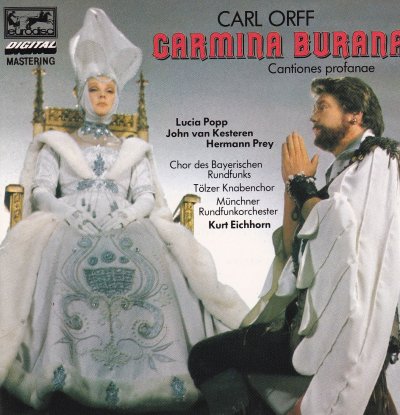
Carmina Burana: Cantiones profanae
Liner Notes · 1973
Carmina Burana
Composer · 1972
Catulli Carmina
Composer · 1971
Album cover
Carmina Burana
Composer · 1970
Trionfo di Afrodite
Composer · 1970
Album cover
Carmina Burana
Composer · 1968