Broken Social Scene
Broken Social Scene is a Canadian indie rock band, a musical collective including as few as six and as many as nineteen members, formed in 1999 by Kevin Drew and Brendan Canning. Most of its members currently play in various other groups and solo projects, mainly based around the city of Toronto. The band refuses the label "supergroup", based on size or the ubiquity of their members, claiming that in the indie scene everyone is involved in more than one project. The group's sound could be considered a combination of all of its members' respective musical projects, and is occasionally considered baroque pop.
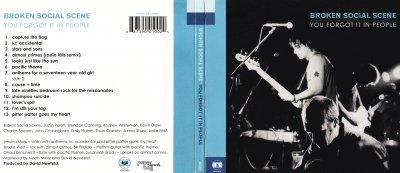
It is characterized by a very large number of sounds, grand orchestrations featuring guitars, horns, woodwinds, and violins, unusual song structures, and an experimental, and sometimes chaotic production style from David Newfeld, who produced the second and third albums. In 2009, This Book Is Broken was published. Written by Stuart Berman, it details the band from its inception to its critical acclaim. In 2010, Bruce McDonald made This Movie Is Broken, a movie about the band's Harbourfront show during the 2009 Toronto strike.
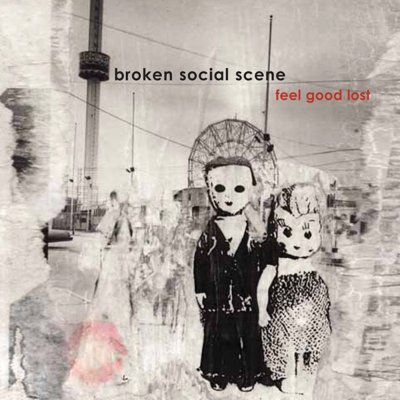
The band's core members are Kevin Drew and Brendan Canning. This duo recorded and released the band's ambient debut album, Feel Good Lost, on Noise Factory Records in 2001, with contributions by Justin Peroff, Charles Spearin, Bill Priddle, Leslie Feist, Jessica Moss and Stars' Evan Cranley. However, when they played shows to support the album, Drew and Canning found it difficult to put together an entertaining show based on their material thus far, which was almost entirely instrumental. As a result, they brought in a number of friends from the Toronto indie scene—album contributors as well as Andrew Whiteman, Jason Collett, and Metric's Emily Haines—to flesh out their live show with lyrics and vocals.
Over time, the band also came to include contributions from James Shaw, Justin Peroff, John Crossingham, and Stars member Amy Millan.
The Groove is music.nw’s own measure of renown — not an opinion, a fact computed from the record. It weighs reach (how many people engaged) against acclaim (how highly they rated it), balanced so a handful of votes can’t outshout a lasting favourite.
Computed the NeuraWeb way, across the whole record. The same yardstick for everyone — which is why the little-known can out-Groove the famous in their own corner.
Discography