Bob Marley
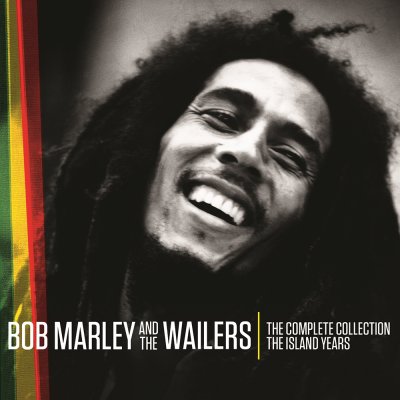
Robert Nesta "Bob" Marley, OM (6 February 1945 - 11 May 1981) was a Jamaican singer-songwriter and musician. He was the rhythm guitarist and lead singer for the ska, rocksteady and reggae band Bob Marley & The Wailers (1963-1981). Marley remains the most widely known and revered performer of reggae music, and is credited with helping spread both Jamaican music and the Rastafari movement to a worldwide audience.
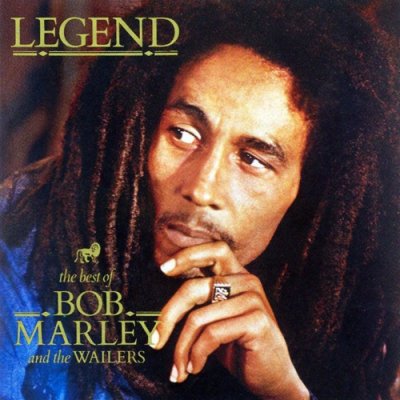
Marley's music was heavily influenced by the social issues of his homeland, and he is considered to have given voice to the specific political and cultural nexus of Jamaica. His best-known hits include "I Shot the Sheriff", "No Woman, No Cry", "Could You Be Loved", "Stir It Up", "Get Up Stand Up", "Jamming", "Redemption Song", "One Love" and, "Three Little Birds", as well as the posthumous releases "Buffalo Soldier" and "Iron Lion Zion". The compilation album Legend (1984), released three years after his death, is reggae's best-selling album, going ten times Platinum which is also known as one Diamond in the U.S., and selling 25 million copies worldwide.
Bob Marley was born in the village of Nine Mile in Saint Ann Parish, Jamaica as Nesta Robert Marley. A Jamaican passport official would later swap his first and middle names. His father, Norval Sinclair Marley, was a white Jamaican of mixed and English descent whose family came from Sussex, England. Norval was a captain in the Royal Marines, as well as a plantation overseer, when he married Cedella Booker, an Afro-Jamaican then 18 years old. Norval provided financial support for his wife and child, but seldom saw them, as he was often away on trips. In 1955, when Bob Marley was 10 years old, his father died of a heart attack at age 70. Marley faced questions about his own racial identity throughout his life. He once reflected:
I don't have prejudice against meself. My father was a white and my mother was black. Them call me half-caste or whatever. Me don't deh pon nobody's side. Me don't deh pon the black man's side nor the white man's side. Me deh pon God's side, the one who create me and cause me to come from black and white.
Although Marley recognised his mixed ancestry, throughout his life and because of his beliefs, he self-identified as a black African, following the ideas of Pan-African leaders. Marley stated that his two biggest influences were the African-centered Marcus Garvey and Haile Selassie. A central theme in Bob Marley's message was the repatriation of black people to Zion, which in his view was Ethiopia, or more generally, Africa. In songs such as "Black Survivor", "Babylon System", and "Blackman Redemption", Marley sings about the struggles of blacks and Africans against oppression from the West or "Babylon".
Marley and his step brother Bunny Wailer (Bob's mother had a daughter with Bunny's father, younger sister to both of them) started to play music while he was still at school, which he left at the age of 14 to make music with Joe Higgs, a local singer and devout Rastafari. At a jam session with Higgs and Livingston, Marley met Peter McIntosh (later known as Peter Tosh), who had similar musical ambitions. In 1962, Marley recorded his first two singles, "Judge Not" and "One Cup of Coffee", with local music producer Leslie Kong. These songs, released on the Beverley's label under the pseudonym of Bobby Martell, attracted little attention. The songs were later re-released on the box set Songs of Freedom, a posthumous collection of Marley's work. Marley was also known to use an Epiphone guitar for much of his career.
Discography
Credits
Ranked #2,427 of 14,615 producers — 548.96 career Groove across 8 records.