Μάνος Χατζιδάκις
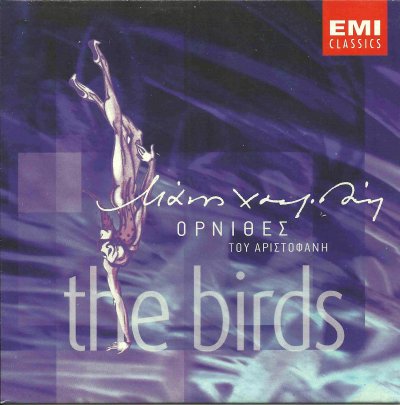
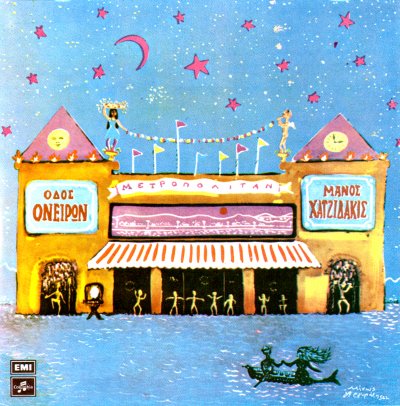
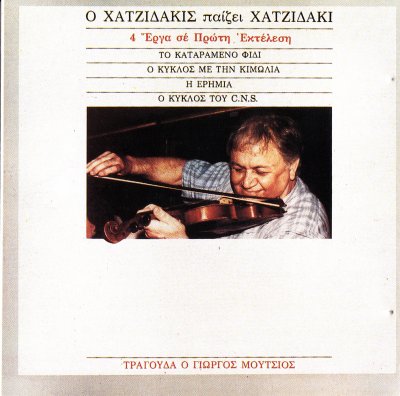
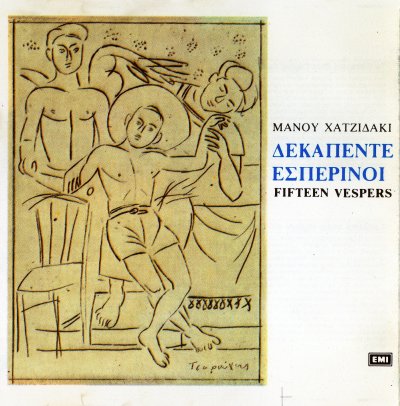
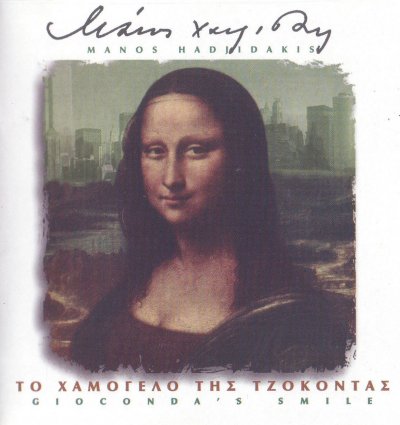
Manos Hatzidakis was born on 23 October 1925 in Xanthi, Greece to lawyer Georgios Hatzidakis, who came from the village of Mirthios, Agios Vasileios in the Rethymno prefecture in Crete; and Aliki Arvanitidou, who came from Adrianopolis. His musical education began at the age of fourteen and consisted of piano lessons from the Armenian pianist Altunian. At the same time, he learned to play the violin and the accordion. After the separation of his parents, Hatzidakis moved permanently to Athens in 1932 with his mother. A few years later in 1938, his father died in an aircraft accident. This event, in combination with the beginning of World War II, brought the family into a difficult financial situation. The young Hatzidakis earned his livelihood as a docker at the port, an ice seller at the Fix factory, an employee in Megalokonomou's photography shop and as an assistant nurse at the 401 Military Hospital. At the same time, he expanded his musical knowledge by studying advanced music theory with Menelaos Pallandios, in the period 1940-1943. At the same time, he studied philosophy at the University of Athens. However, he never completed this course. During this period, he met and connected with other musicians, writers and intellectuals. Among these were Nikos Gatsos, George Seferis, Odysseas Elytis, Angelos Sikelianos and the artist Yannis Tsarouchis. During the last period of the Axis occupation of Greece, he was an active participant in the Greek Resistance through membership of the United Panhellenic Organization of Youth (EPON), the youth branch of the major resistance organisation EAM, where he met Mikis Theodorakis with whom he soon developed a strong friendship. His very first work was the tune for the song "Paper Moon" ("Χάρτινο το Φεγγαράκι"), from Tennessee Williams' A Streetcar Named Desire staged by Karolos Koun's Art Theatre of Athens, a collaboration which continued for 15 years. His first piano piece, "For a Small White Seashell" ("Για μια Μικρή Λευκή Αχιβάδα"), came out in 1947 and in 1948 he shook the musical establishment by delivering his legendary lecture on rembetika, the urban folk songs that flourished in Greek cities, mainly Piraeus, after the Asia Minor refugee influx in 1922 and until then had heavy underworld and cannabis use connections and were consequently looked down upon. Hatzidakis focused on the economy of expression, the deep traditional roots and the genuineness of emotion displayed in rembetika, and exalted the likes of composers like Markos Vamvakaris and Vassilis Tsitsanis. Putting theory to practice, he adapted classic rembetika in his 1951 piano work, Six Folk Paintings (Έξι Λαϊκές Ζωγραφιές), which was later also presented as a folk ballet. In 1949 he co-founded the Greek Dance Theatre Company with the choreographer Rallou Manou. At this point he began writing immensely popular "pop" songs and movie soundtracks alongside more serious works, such as 1954's The C.N.S. Cycle (O Kyklos tou C.N.S.), a song cycle for piano and voice recalling the German lied in its form, if not in style. In 1955 he wrote the score for Michael Cacoyannis' film Stella, with actress Melina Mercouri, singing the movie's trademark song "Love that became a double-edged knife" ("Αγάπη που 'γινες δίκοπο μαχαίρι"). Hatzidakis always maintained that he wrote his serious pieces for himself and his less serious ones to make a living. In 1958, Hatzidakis met Nana Mouskouri, his first "ideal interpreter", a skilled vocalist who shaped the sounds of his music. It was 1960 that brought him international success, as his song "Never on Sunday" ("Τα παιδιά του Πειραιά"), from Jules Dassin's film Never on Sunday (Ποτέ την Κυριακή), won him an Academy Award and became a worldwide hit. In 1962, he produced the musical Street of Dreams (Οδός Ονείρων) and completed his score for Aristophanes' Birds (Όρνιθες), another Art Theater production which caused an uproar over Karolos Koun's revolutionary direction. The score was also used later by Maurice Béjart's 20th Century Ballets. He also wrote the music for a song which Arthur Altman added English lyrics to and gave to Brenda Lee. The song was "All Alone Am I". In 1964 he released the album 15 Vespers (Δεκαπέντε Εσπερινοί) with the famous song "Mr Antonis ("Ο Κυρ Αντώνης"). In 1965, his LP Gioconda's Smile (Το Χαμόγελο της Τζιοκόντας) was released on Minos-EMI. In 2004, it was re-released, digitally remastered as an audiophile LP and a CD in the EMI Classics collection. In 1966 he travelled to New York City for the premiere of Illya Darling, a Broadway musical based on Never on Sunday, which starred Mercouri. He did not return to Greece until 1972 due to his opposition to Greece's military dictatorship.
Discography