Ariel Ramírez
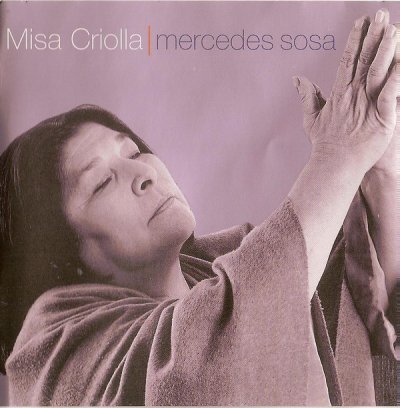
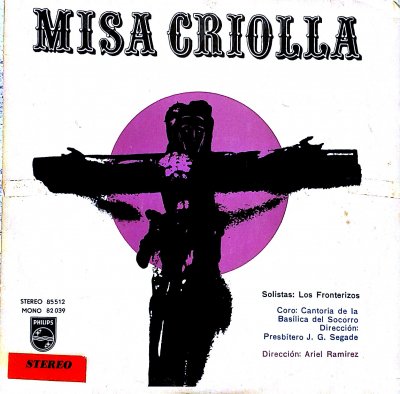
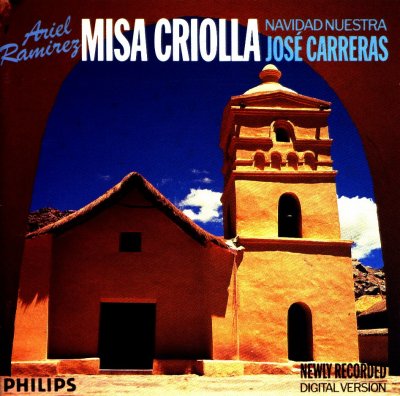
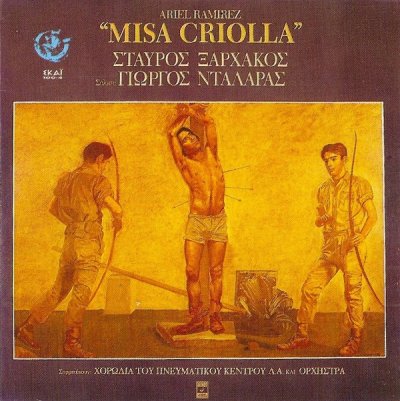
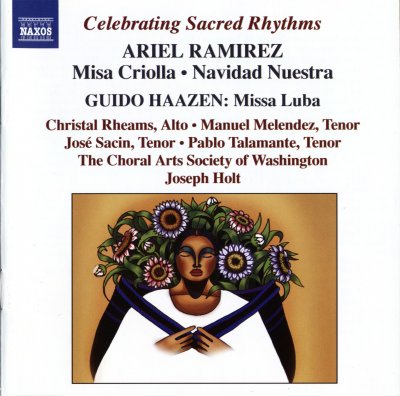
Ariel Ramírez (4 September 1921 - 18 February 2010) was an Argentine composer, pianist and music director. He was considered "a chief exponent of Argentine folk music" and noted for his "iconic" musical compositions. Ramírez is known primarily for his Misa Criolla (1964). It allowed him to travel around Europe and Latin America to build his reputation. He had more than 300 compositions during his career and sold millions of albums. By the time he died in 2010, his work was globally renowned.Plácido Domingo, José Carreras and Mercedes Sosa are some of the artists to have recorded his work. He was also associated with Miguel Brascó and Felix Luna. Ariel Ramírez was born in Santa Fe, Argentina. His father was a teacher and it had been thought Ramírez would also pursue this career path but the job lasted for just two days due to "discipline problems".He pursued initially tango before switching to Argentine folklore. He began his piano studies in Santa Fe, and soon became fascinated with the music of the gauchos and creoles in the mountains. He continued his studies in Córdoba, where he met the great Argentinian folk singer and songwriter Atahualpa Yupanqui and was influenced by him. Following a suggestion from Yupanqui, he visited the North East of Argentina and deepened his research into the traditional rhythms of South America. He spent time in Mendoza and Buenos Aires. At the same time continuing his academic studies as a composer at the National Conservatory of Music, in Buenos Aires. In 1946 he made his first recording, with RCA. He made twenty records with RCA until 1956. Ramírez went on to study classical music in Madrid, Rome and mainly in Vienna, from 1950 to 1954. Back in Argentina, he collected over 400 folk and country songs and popular songs and founded the Compañía de Folklore Ariel Ramírez. Ramírez married Inés Cuello de Ramirez. Together they had two sons. In 1964, the Ramírez' composition Misa Criolla marked the beginning of a period of high musical productivity for the composer which also heralded the premieres of the works Navidad Nuestra (1964), La Peregrinación (1964); Los caudillos (1965); Mujeres Argentinas (1969), and Alfonsina y el Mar (1969), all produced in collaboration with writer Félix Luna. Misa Criolla was an early non-Latin Masses post-Second Vatican Council. The Washington Post described Misa Criolla as "a stunning artistic achievement, combined Spanish text with indigenous instruments and rhythms". It led to album sales numbering in the millions internationally. Ramírez once told The Jerusalem Post how Misa Criolla was inspired by a visit to Germany after World War II. While there he had an encounter with a group of nuns, which led him to consider writing "a spiritual piece". This would eventually become the Misa Criolla. Misa Criolla and Alfonsina y el Mar are probably his best known compositions. The Misa, a mass for either male or female soloists, chorus and orchestra, is based on folk genres such as chacarera, carnavalito and estilo pampeano, with Andean influences and instruments. It is also one of the first masses to be celebrated in a modern language following the lifting on their ban by the Second Vatican Council. Ramírez wrote the piece in 1963-1964 and it was recorded in 1964 by Philips Records, directed by Ramírez himself with Los Fronterizos as featured performers (Philips 820 39 LP, including Navidad Nuestra, remastered in 1994 and released by Philips as CD 526155-2). It was not publicly performed until 1967 in Düsseldorf, Germany, during a European tour which eventually brought Ariel Ramírez before Pope Paul VI. His Mass for peace and justice (1981) is quite famous. Equally famous are the recordings with the solo voices of George Dalaras (1989), José Carreras (1990), and Mercedes Sosa (1999). Plácido Domingo recorded the Kyrie (i.e., the first movement of the Misa) with Dominic Miller on guitar (2003). Albeit not sharing the same worldwide success, Alfonsina y el Mar enjoys great popularity in Latin America and Spain, being one of the most regarded songs in Argentinian folk music. The piece pays homage to poet Alfonsina Storni, evoking her tragic suicide in 1938, when she walked into the sea at La Perla beach in Mar del Plata, and the poem she wrote as a goodbye message, I Am Going to Sleep. Artists of the stature of Mercedes Sosa, Violeta Parra, Alfredo Kraus and José Carreras (with Pasión Vega) have made recordings of the song, as well as many other popular singers including Shakira, Miguel Bosé, Andrés Calamaro and Paloma San Basilio. Other major compositions by Ramírez include the Cantata Sudamericana (again with text by Félix Luna, 1972) and another mass: Misa por la paz y la justicia (with liturgical texts by Félix Luna and Osvaldo Catena, 1980). He had more than 300 compositions during his career. With Luna he created the Merecedes Sosa hits Mujeres Argentinas (Argentine Women), which documented women fighting for their freedom, and Cantata Sudamericana (South American Cantata). Along with the Hamlet Lima Quintana, Ramírez also composed the music for Spanish film director Carlos Saura's TV film El Sur, which is based on the short story El Sur by Argentine author Jose Luis Borges.
Discography

Credits