music.nwby NeuraWeb Global Inc.
~13.0M artists · ~39.4M recordings indexed
Narrow to
AS
Person · composer

Alessandro Scarlatti

Albums
219
Members
0
Active
1660–1725
Origin
Italy
Biography

Alessandro Scarlatti (2 May 1660 – 22 October 1725) was an Italian Baroque composer, especially famous for his operas and chamber cantatas. He is considered the founder of the Neapolitan school of opera. He was the father of two other composers, Domenico Scarlatti and Pietro Filippo Scarlatti. Life : Scarlatti was born in Palermo, then part of the Kingdom of Sicily. He is generally said to have been a pupil of Giacomo Carissimi in Rome, and some theorize that he had some connection with northern Italy because his early works seem to show the influence of Stradella and Legrenzi. The production at Rome of his opera Gli Equivoci nell sembiante (1679) gained him the support of Queen Christina of Sweden (who at the time was living in Rome), and he became her Maestro di Cappella. In February 1684 he became Maestro di Cappella to the viceroy of Naples, perhaps through the influence of his sister, an opera singer, who might have been the mistress of an influential Neapolitan noble. Here he produced a long series of operas, remarkable chiefly for their fluency and expressiveness, as well as other music for state occasions. In 1702 Scarlatti left Naples and did not return until the Spanish domination had been superseded by that of the Austrians. In the interval he enjoyed the patronage of Ferdinando de' Medici, for whose private theatre near Florence he composed operas, and of Cardinal Ottoboni, who made him his maestro di cappella, and procured him a similar post at the Basilica di Santa Maria Maggiore in Rome in 1703. After visiting Venice and Urbino in 1707, Scarlatti took up his duties in Naples again in 1708, and remained there until 1717. By this time Naples seems to have become tired of his music; the Romans, however, appreciated it better, and it was at the Teatro Capranica in Rome that he produced some of his finest operas (Telemaco, 1718; Marco Attilio Regolò, 1719; La Griselda, 1721), as well as some noble specimens of church music, including a mass for chorus and orchestra, composed in honor of Saint Cecilia for Cardinal Acquaviva in 1721. His last work on a large scale appears to have been the unfinished serenata for the marriage of the prince of Stigliano in 1723. He died in Naples in 1725. Scarlatti's music : Scarlatti's music forms an important link between the early Baroque Italian vocal styles of the 17th century, with their centers in Florence, Venice and Rome, and the classical school of the 18th century. Scarlatti's style, however, is more than a transitional element in Western music; like most of his Naples colleagues he shows an almost modern understanding of the psychology of modulation and also frequently makes use of the ever-changing phrase lengths so typical of the Napoli school. His early operas (Gli equivoci nel sembiante 1679; L'honestà negli amori 1680, containing the famous aria "Già il sole dal Gange"; Il Pompeo 1683, containing the well-known airs "O cessate di piagarmi" and "Toglietemi la vita ancor," and others down to about 1685) retain the older cadences in their recitatives, and a considerable variety of neatly constructed forms in their charming little arias, accompanied sometimes by the string quartet, treated with careful elaboration, sometimes with the continuo alone. By 1686 he had definitely established the "Italian overture" form (second edition of Dal male il bene), and had abandoned the ground bass and the binary form air in two stanzas in favour of the ternary form or da capo type of air. His best operas of this period are La Rosaura (1690, printed by the Gesellschaft für Musikforschung), and Pirro e Demetrio (1694), in which occur the arias "Le Violette", and "Ben ti sta, traditor".

From about 1697 onwards (La caduta del Decemviri), influenced partly perhaps by the style of Giovanni Bononcini and probably more by the taste of the viceregal court, his opera arias become more conventional and commonplace in rhythm, while his scoring is hasty and crude, yet not without brilliance (L'Eraclea, 1700), the oboes and trumpets being frequently used, and the violins often playing in unison. The operas composed for Ferdinando de' Medici are lost; they might have given a more favourable idea of his style as his correspondence with the prince shows that they were composed with a very sincere sense of inspiration.

Mitridate Eupatore, accounted his masterpiece, composed for Venice in 1707, contains music far in advance of anything that Scarlatti had written for Naples, both in technique and in intellectual power. The later Neapolitan operas (L'amor volubile e tiranno 1709; La principessa fedele 1710; Tigrane, 1714, &c.) are showy and effective rather than profoundly emotional; the instrumentation marks a great advance on previous work, since the main duty of accompanying the voice is thrown upon the string quartet, the harpsichord being reserved exclusively for the noisy instrumental ritornelli. In his opera Teodora (1697) he originated the use of the orchestral ritornello.

His last group of operas, composed for Rome, exhibit a deeper poetic feeling, a broad and dignified style of melody, a strong dramatic sense, especially in accompanied recitatives, a device which he himself had been the first to use as early as 1686 (Olimpia vendicata) and a much more modern style of orchestration, the horns appearing for the first time, and being treated with striking effect.

Besides the operas, oratorios (Agar et Ismaele esiliati, 1684; La Maddalena, 1685; La Giuditta, 1693; Christmas Oratorio, c. 1705; S. Filippo Neri, 1714; and others) and serenatas, which all exhibit a similar style, Scarlatti composed upwards of five hundred chamber-cantatas for solo voice. These represent the most intellectual type of chamber-music of their period, and it is to be regretted that they have remained almost entirely in manuscript, since a careful study of them is indispensable to anyone who wishes to form an adequate idea of Scarlatti's development.

His few remaining Masses (the story of his having composed two hundred is hardly credible) and church music in general are comparatively unimportant, except the great St Cecilia Mass (1721), which is one of the first attempts at the style which reached its height in the great Masses of Johann Sebastian Bach and Beethoven. His instrumental music, though not without interest, is curiously antiquated as compared with his vocal works.

Discography
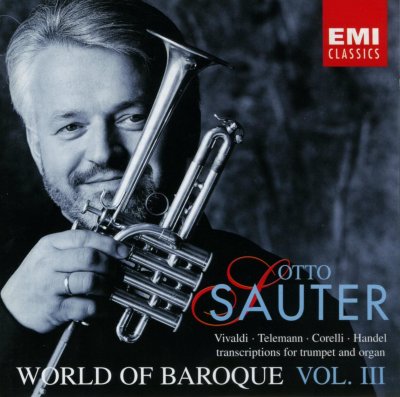
Album cover
World of Baroque, Volume 3 (Transcriptions for Trumpet and Organ)
Alessandro Scarlatti · 2001
Concerti & Sinfonie
Alessandro Scarlatti · 2002
Contralto
Alessandro Scarlatti · 2002
Il Dolore di Maria Vergine: Oratorio A 4 Voci
Alessandro Scarlatti · 2002
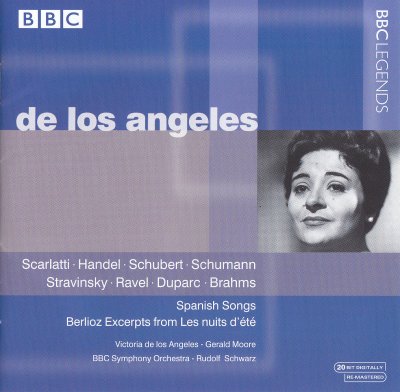
Album cover
Spanish Songs / Berlioz: Excerpts from Les nuits d'été
Alessandro Scarlatti · 2002
Griselda
Alessandro Scarlatti · 2003
Griselda
Alessandro Scarlatti · 2003
Il Martirio Di Santa Cecilia
Alessandro Scarlatti · 2003
Janet Baker with Dietrich Fischer-Dieskau
Alessandro Scarlatti · 2003
Oratorio Per La Santissima Trinità
Alessandro Scarlatti · 2003
Arcadia
Alessandro Scarlatti · 2004
Colpa, Pentimento e Grazia
Alessandro Scarlatti · 2004
Il Giardino Di Rose: Sinfonie & Harpsichord Concertos
Alessandro Scarlatti · 2004
La Santissima Trinità
Alessandro Scarlatti · 2004
Disperato amore
Alessandro Scarlatti · 2005
Il Trionfo dell'Onore
Alessandro Scarlatti · 2005
Stabat Mater
Alessandro Scarlatti · 2005
Stabat Mater
Alessandro Scarlatti · 2005
Toccatas (Complete Keyboard Works, Volume 1)
Alessandro Scarlatti · 2005
Inferno: Cantate drammatiche
Alessandro Scarlatti · 2006
Totus Amore
Alessandro Scarlatti · 2006
Cantatas
Alessandro Scarlatti · 2007
Concertos and Sinfonias
Alessandro Scarlatti · 2007
Magnificat / Dixit Dominus
Alessandro Scarlatti · 2007
Magnificat Dixit Dominus
Alessandro Scarlatti · 2007
Opera omnia per tastiera, Vol. I
Alessandro Scarlatti · 2007
Pergolesi / Scarlatti: Stabat Mater
Alessandro Scarlatti · 2007
Pergolesi: Messa Romana / Scarlatti: Messa per il Santo Natale
Alessandro Scarlatti · 2008
Euridice Dall'Inferno / La Concettione Della Beata Vergine
Alessandro Scarlatti · 2009
Intermezzi
Alessandro Scarlatti · 2009
Opera omnia per tastiera, Vol. II
Alessandro Scarlatti · 2009
Salve Regina: Sacred Music from Naples
Alessandro Scarlatti · 2009
Complete Keyboard Works, Volume 2
Alessandro Scarlatti · 2010
Opera omnia per tastiera, Vol. III
Alessandro Scarlatti · 2010
San Filippo Neri
Alessandro Scarlatti · 2010
Travelogues of Italy
Alessandro Scarlatti · 2010
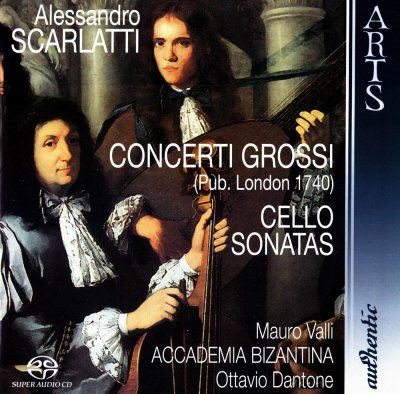
Album cover
Concerti Grossi / Cello Sonatas
Alessandro Scarlatti · 2011
Italian Baroque Music Edition
Alessandro Scarlatti · 2011
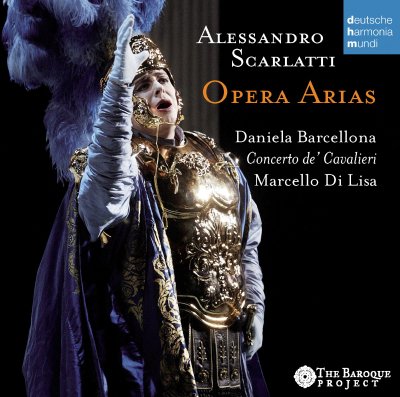
Album cover
Opera Arias
Alessandro Scarlatti · 2011
Salve Regina: Cantatas & Motets
Alessandro Scarlatti · 2011
Album cover
Scarlatti: Serenata a Filli - Le muse Urania e Clio lodano le bellezze di Filli
Alessandro Scarlatti · 2011
Great Baroque Masterpieces
Alessandro Scarlatti · 2012
Griselda
Alessandro Scarlatti · 2012
Let the Bright Seraphim
Alessandro Scarlatti · 2012
L’Olimpia / L’Arianna / Su le sponde del Tebro
Alessandro Scarlatti · 2012
Passo Di Pena In Pena - Cantate Italiane
Alessandro Scarlatti · 2012
A. Scarlatti - Profano e Sacro
Alessandro Scarlatti · 2013
Dixit Dominus
Alessandro Scarlatti · 2013
Opera omnia per tastiera, Vol. IV
Alessandro Scarlatti · 2013
Sinfonie de Concerto Grosso Opere per flauto e continuo
Alessandro Scarlatti · 2014
Con eco d'amore
Alessandro Scarlatti · 2015
I musicisti dell’imperatore
Alessandro Scarlatti · 2015
Orfeo(s): Italian & French Cantatas
Alessandro Scarlatti · 2015
Bella Immago
Alessandro Scarlatti · 2016
Judith Blegen - Frederica von Stade
Alessandro Scarlatti · 2016
Missa defunctorum, Magnificat, Miserere, Salve Regina
Alessandro Scarlatti · 2016
Opera omnia per tastiera, Vol. V
Alessandro Scarlatti · 2016
Brian Asawa: The Complete RCA Recordings
Alessandro Scarlatti · 2017
Passio Secundum Johannem
Alessandro Scarlatti · 2017
Complete Cello Works
Alessandro Scarlatti · 2018

Credits

La Santissima Trinità
Composer · 2004
Bella madre de’ fiori
Composer · 2001
Album cover
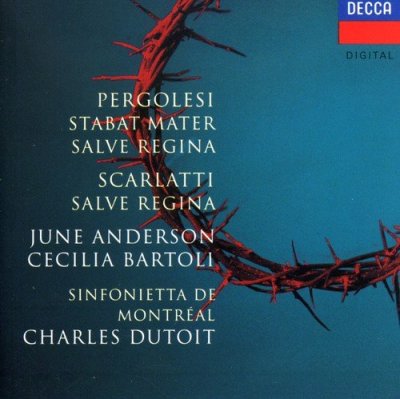
Pergolesi: Stabat Mater, Salve Regina / Scarlatti: Salve Regina
Composer · 1993
Toccate per cembalo
Composer · 1992
La Folia
Composer · 1988
Madrigali
Composer · 1987
Album cover
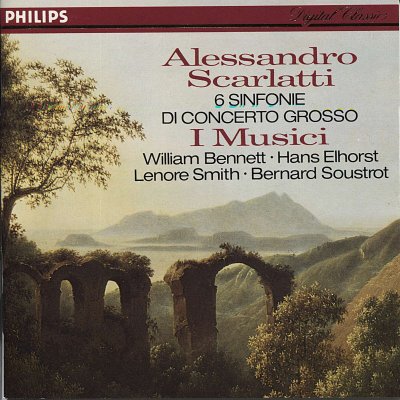
6 Sinfonie di Concerto Grosso
Composer · 1982
St. Cecilia Mass (1720)
Composer · 1980
Album cover
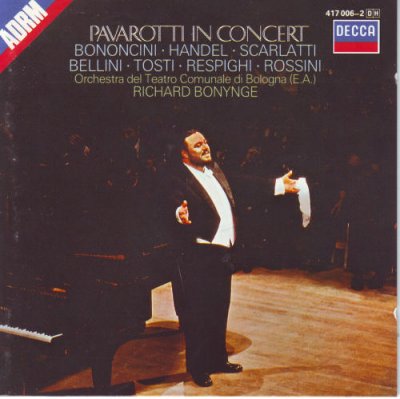
Pavarotti in Concert
Composer · 1974
Album cover
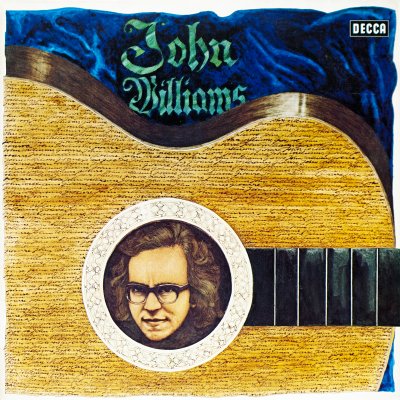
Gitarre
Composer · 1972
11 Sonaten / Toccata Settima
Composer · —
12 Sinfonie Di Concerto Grosso
Composer · —
12 Sinfonie Di Concerto Grosso
Composer · —
6 Concerti
Composer · —
6 Concerti Grossi
Composer · —
A Baroque Christmas
Composer · —
A Golden Treasury Of Ancient Instruments
Composer · —
Antologia Della Musica Clavicembalistica Italiana Del Secolo XVII - Libro 2
Composer · —
Arias & Cantates Pour Soprano Et Trompette
Composer · —
Arie Antiche
Composer · —
A.Scarlatti - Geminiani - B. Marcello - Manfredini - Corelli
Composer · —
A. Scarlatti: "Su Le Sponde Del Tebro" / A. Ariosti: "Lezione V E-Moll" / A. Corelli: "La Follia"
Composer · —
Baroque Recorder Concertos
Composer · —
Blockflötenmusik Auf Originalinstrumenten • Recorder Music With Original Instruments - Ⅲ (1650-1750)
Composer · —
Cäcilienvesper
Composer · —
Cantatas (Volume. II)
Composer · —
Cantate «Arianna» / Sinfonia & Sonates Pour Flûtes À Bec
Composer · —
Cantate "Clori E Mirtillo" / Serenade "Venere E Amore"
Composer · —
Canti Popolari Italiani , I Canti Dell'Amore
Writer · —
Cinque Profeti - Weihnachtskantate / Christmas Cantata
Composer · —
Concerti Da Camera Musica Pacifica
Composer · —
Concerti Grossi
Composer · —
Concerto Pour Trompette
Composer · —
Concertos For The Kingdom Of The Two Sicilies
Composer · —
Concertos In Contrast
Composer · —
Con Voce Festiva
Composer · —
Diana & Endimione
Composer · —
Discover Music Of The Baroque Era
Composer · —
Due Cantate
Composer · —
Early Italian Church Cantatas
Composer · —
Endimione E Cintia
Composer · —
Euridice Dall'Inferno / La Concettione Della Beata Vergine
Composer · —
Gloria
Composer · —
Griselda
Composer · —
Humanita E Lucifero Oratorio 1704
Composer · —
I Concerti Per Flauto E Archi
Composer · —
II Trionfo Dell'Onore
Composer · —
Il Dolore di Maria Vergine: Oratorio A 4 Voci
Composer · —
Il Giardino D'Amore
Composer · —
Il Giardino Di Amore (Venere E Adone)
Composer · —
Il Giardino Di Rose: Sinfonie & Harpsichord Concertos
Composer · —
Il Martirio Di Santa Cecilia
Composer · —
Il Primo Omicidio
Composer · —
I Madrigali
Composer · —
Instrumentale Meesterwerken
Composer · —
Italian Baroque Music Edition
Composer · —
Italské Settecento
Composer · —
Johannes-Passion
Composer · —
John Williams Plays Bach & Scarlatti
Composer · —
Kammermusik · Cembalowerke · Arien · Canzonen
Composer · —