Add The New York Post on Google The skeletal remains of a missing Los Alamos lab worker, recently discovered in New Mexico, have only deepened the mystery surrounding her disappearance.
Melissa Casias, 53, walked out of her home near Taos on June 26, 2025, and remained missing until the grim discovery of her body by a hiker on May 28. Her case has been associated with the curious spate of 11 missing scientists across the US.
Casias’ body was discovered skeletonized, with her sunbaked remains propped against a tree alongside a handgun in Kit Carson National Forest.
New Mexico State Police told The Post her skull had been fractured, but a CT scan did not reveal any projectiles in the skull.
Investigators are awaiting further autopsy results to determine the manner of death, according to spokesperson Sgt. Ricardo Breceda.
The two most likely options are now suicide or murder.
“If that gun isn’t rusted shut, then I call bulls—t,” said firebrand private investigator Thomas McNally, implying that if foul play was involved the scene could have been staged to resemble a suicide.
According to local news reports, Casias’ clothes were sun-bleached but her corpse appeared undisturbed by predation by forest creatures, but this has not been confirmed by police.
McNally, a former homicide detective and Phoenix-based private investigator hired by members of Casias’ birth family claims the investigation into her disappearance was bungled from the start.
“The State Police did not launch any type of search and rescue effort at all. Melissa’s niece, Jazmin, had to source a local search and rescue organization. And then, in order for them to deploy, they had to have the approval and blessing of the State Police,” McNally told The Post.
NMSP described the area Casias’ body was discovered as the McGaffey Ridge section of the park, approximately 6 to 15 miles from Casias’ home in Ranchos de Taos, which Breceda said is a well-traveled, popular hiking destination. Yet still it took almost a year to locate the body. Her family have said in a statement the area where she was discovered had previously been searched.
While she has been associated with the missing scientists, both sides of Casias’ sharply divided family agree on one thing — her job as an administrative assistant as Los Alamos National Laboratory had nothing to do with her disappearance, as has been speculated online.
Her husband Mark Casias, 61, and their daughter Sierra, 19, believe Melissa left on her own and may have took her own life, but Melissa’s birth family, including parents, sister and niece, suspect foul play in some form is involved.
According to unidentified sources McNally says he spoke to, Mark — who also works at Los Alamos as a Superintendent in the maintenance department — is alleged to have asked neighbors if they had cameras installed on their properties shortly before his wife disappeared.
Two days after she went missing, Mark reportedly made a comment that his wife may have faked her own death in a life insurance scheme, according to one of McNally’s sources.
Mark could not be reached for comment by The Post. Workers at Los Alamos previously confirmed he was at work when Casias disappeared.
Police have yet to announce any suspects or persons of interest in relation to Casias’ death.
“We are thoroughly investigating this case. It originated as a missing persons investigation. Now that we have located her remains we are examining all of our findings and seeing where the evidence leads the investigation,” Breceda said.
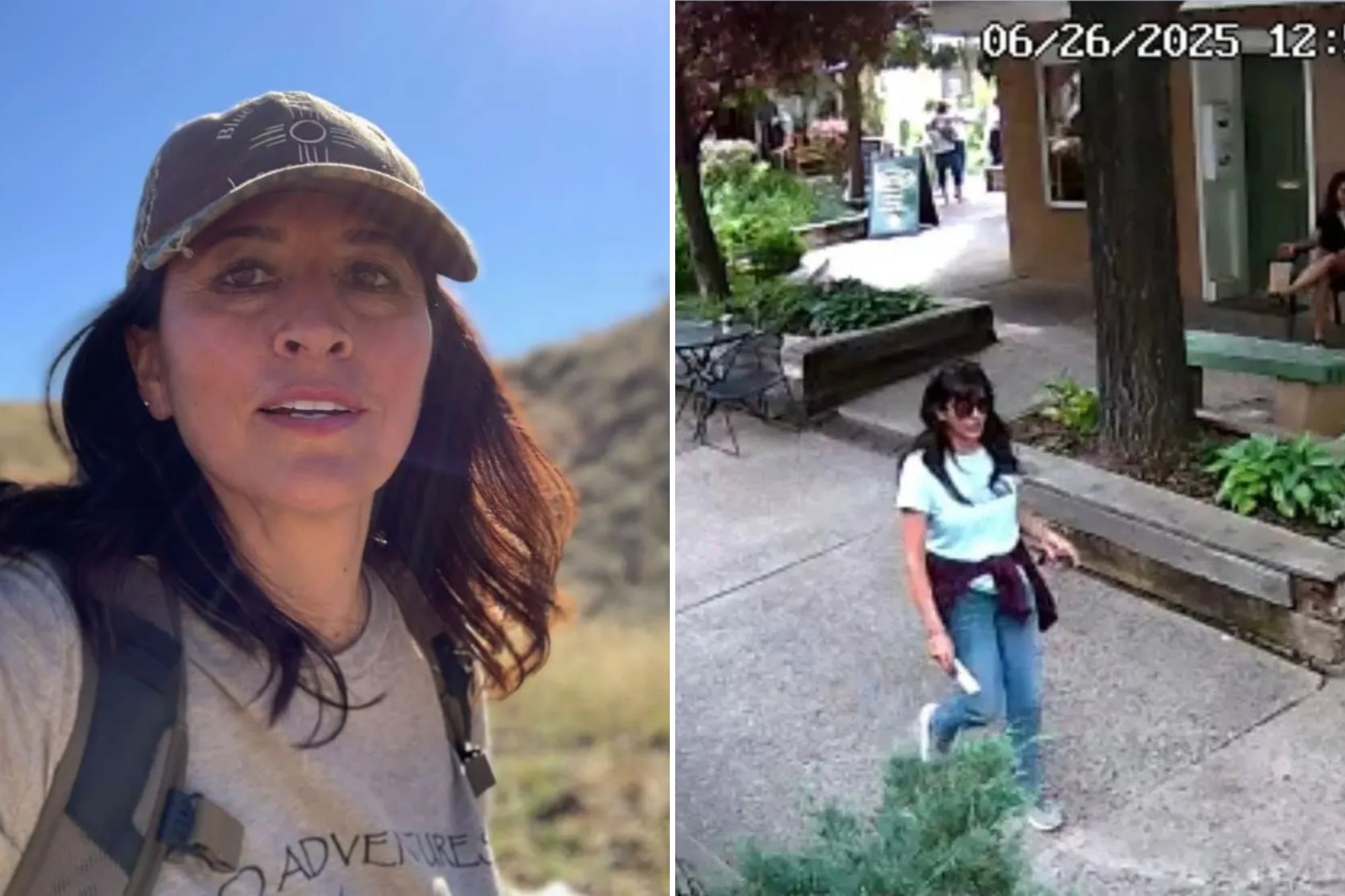
Casias was last seen around 2:18 p.m. in surveillance footage, wearing a backpack and walking briskly eastbound alone on State Road 518 in the direction where her body was eventually found.
Her mother, Joann Mondragon, previously told The Post Casias liked to take early morning walks, but was not known to do so on such a hot summer afternoon.
McNally claims the woman in that video is not Casias and questioned whether time stamps on the video could have been doctored. Breceda flatly rejected that speculation and stated NMSP have established the woman in that video is Casias.
Casias’ car was left parked outside her home and she also left behind her keys, work cellphone, personal cellphone, wallet and purse. Both phones had been factory reset, but at different times, digital forensics revealed — one the night before and the other that morning.
Her reading glasses and a 90-day supply of thyroid medication were missing from the home.
The Post has learned two drops of human blood were found on the master bedroom tile floor of the Casias’ home, according to a source. Those samples are currently undergoing DNA analysis.
But it may be too late to recover more evidence, if any exists.
“They did not test the rest of the master bedroom with luminol, that would have allowed them to see any high speed [blood] spatter, especially now since a firearm has been recovered at the scene where the body was,” McNally claimed.
On the evening of his wife’s disappearance, Mark wasted no time bad-mouthing his missing wife, according to interviews with Melissa’s birth family, the Mondragons, in the podcast “Crime Junkie.”
Mark said Melissa had been on a “roll with f—k ups lately,” had “destroyed their finances,” accumulated significant debt and gotten behind on tax payments, they claimed on the podcast.
The family also said Mark had admitted to them he and his wife had an argument that morning over Melissa’s vaping.
In later interviews Mark denied speaking ill of Melissa the night before she disappeared, calling the claim “downright wrong” and dismissing the vape fight as a minor marital spat.
According to McNally, his sources said claimed the couple fought often.
“In the days prior to Melissa going missing, Mark was asking neighbors if they had cameras. On the day Melissa went missing, the next door neighbor heard a scream from inside the Casillas residence between 1:45 and 2 p.m.
“They also reported they routinely heard screaming, yelling and arguing coming from inside the residence because they fought quite frequently,” McNally says his sources told him.
According to records reviewed by The Post, the Casiases were in big financial trouble. Both had garnishes on their wages for unpaid taxes.
Mark claimed he didn’t know the extent of their financial troubles until after Melissa went missing, saying she handled the family’s books.
The investigation into Melissa’s death is ongoing and has not been ruled a homicide. It should be noted most of the suspicions directed at Mark come from one side of a divided family and their associates.
Two days after Casias’ disappearance, Mark theorized to family she may have “bolted” to allow him to collect life insurance money, according to McNally.
“They were getting ready to organize a search at Melissa’s mom and dad’s house in Taos and Mark was there and in front of at least five other people, he said, ‘I know that Melissa ran off and doesn’t want to be found because she knows that I could file a life insurance claim for work,'” McNally claimed.
Police have stated Casias had no active life insurance policy, but it is unknown if Mark knew that. Court records reviewed by The Post show Mark filed a restraining order against McNally on May 18, which is still pending with the court.
Mark said in interviews given later that he last saw his wife at around 6:15 a.m. when she dropped him off at work. After 11 a.m. he got a call from Melissa’s supervisor, which was the first indication for him she was missing.
Casias’ disappearance captured headlines because it occurred around the same time as several others disappearances linked to aeronautics and nuclear research.
Former Los Alamos employee Anthony Chavez, 79, vanished without a trace after leaving his home on foot on May 4, 2025, just seven weeks before Casias.
Monica Reza, 60, an aerospace engineer who served as the director of the NASA Lab’s Materials Processing Group, disappeared while hiking in a Los Angeles forest just steps behind two friends, also in June 2025
Steven Garcia, a government contractor working for a major facility in Albuquerque, also disappeared after walking out of his home on Aug. 28, 2025, carrying only a handgun and no identification.
Retired Air Force Maj. Gen. William Neil McCasland, 68, hasn’t been seen since leaving his home in Albuquerque on Feb. 27. The FBI is now involved in the search for McCasland, who had deep knowledge on UFOs and was involved in some of the Pentagon’s most advanced aerospace research, The Post previously reported.