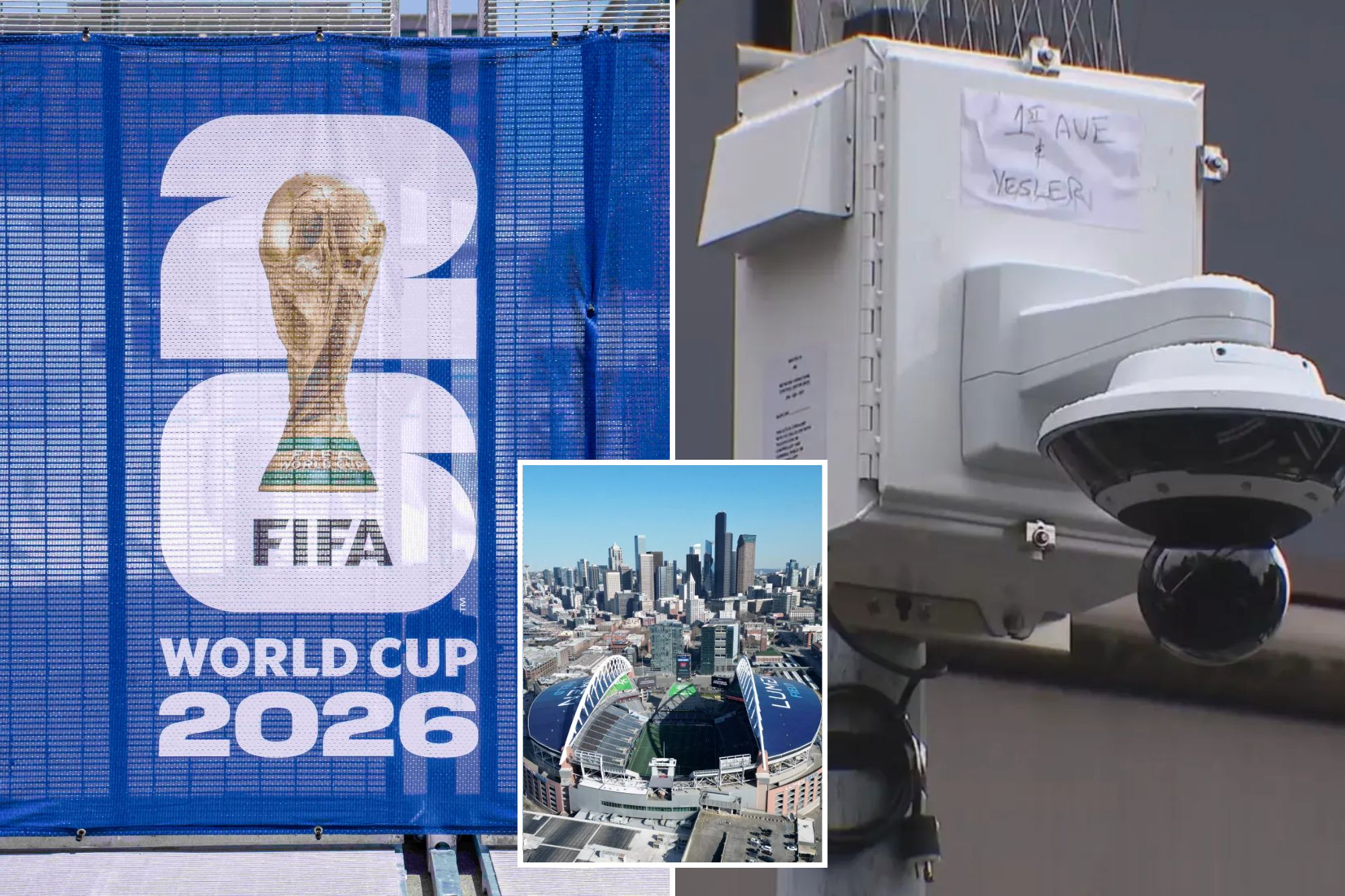
Add The California Post on Google A major West Coast city is activating a controversial network of surveillance cameras ahead of the FIFA World Cup after officials said law enforcement identified what they described as a credible threat to the tournament.
Seattle Mayor Katie Wilson defended the decision over the weekend, announcing dozens of closed-circuit television cameras surrounding the city’s Stadium District will be switched on, Kumon News reported.
The move marks a significant shift for Wilson, who had previously resisted activating the cameras despite their installation, citing concerns about privacy and government access to collected data.
Seattle is one of the host cities for the 2026 FIFA World Cup and is scheduled to stage six matches between mid-June and early July.
Speaking to reporters after an event in the city, Wilson said the change came after a recent security briefing from law enforcement agencies.
“In the last week and a half, I received a briefing from our law enforcement partners that told me there have been credible threats,” Wilson explained. “And so therefore, in line with the announcement I made earlier this year, we decided to turn those cameras on for the duration of the games. After the World Cup we will turn them off.”
The camera system includes 22 devices positioned around Seattle’s Stadium District, which encompasses areas near Pioneer Square and SODO.
The cameras will feed live footage into the Seattle Police Department’s Real Time Crime Center, which already receives video from a larger network of public and private cameras across the city.
Police officials have long argued that the technology helps investigators respond to incidents and solve serious crimes, including homicide cases.
Wilson had previously maintained that the stadium-area cameras would remain inactive unless authorities identified a legitimate security concern. Her earlier objections focused on fears that video data could potentially be accessed by federal agencies and used in immigration investigations or abortion-related inquiries involving people traveling from other states.
The mayor announced the policy reversal in a statement released June 5, only days after indicating that her position on the cameras had not changed.
California Post News: Facebook, Instagram, TikTok, X, YouTube, WhatsApp, LinkedInCalifornia Post Sports Facebook, Instagram, TikTok, YouTube, XCalifornia Post Opinion California Post Newsletters: Sign up here!California Post App: Download here!Home delivery: Sign up here!Page Six Hollywood: Sign up here!
When pressed by reporters about the nature of the threat, Wilson declined to provide specifics but said the information presented by law enforcement convinced her action was necessary.
“This is a pretty standard law enforcement terminology, so if we have information that someone intends to cause harm to people or property or a large event, right, and we believe that they have the means to carry that threat out,” said Wilson. “So I hope… for obvious reasons I’m not going to be giving details, but I was given a briefing that convinced me there is enough of a credible threat.”
Officials say the cameras will be deactivated after the tournament while the city completes a broader review of the surveillance system’s future.
Unlike Seattle, where officials reversed course and activated previously dormant CCTV cameras after being briefed on a ‘credible threat,’ Los Angeles has focused on expanded federal security operations, drone restrictions and surveillance technology as part of what authorities describe as an unprecedented World Cup security effort.