play Live Sign upShow navigation menuplay Live Click here to searchsearchSign upFeatures|Israel attacks LebanonHundred days of Israel’s latest war on LebanonIsrael’s second intensification of its war on Lebanon within two years has reached 100 days, killing thousands.
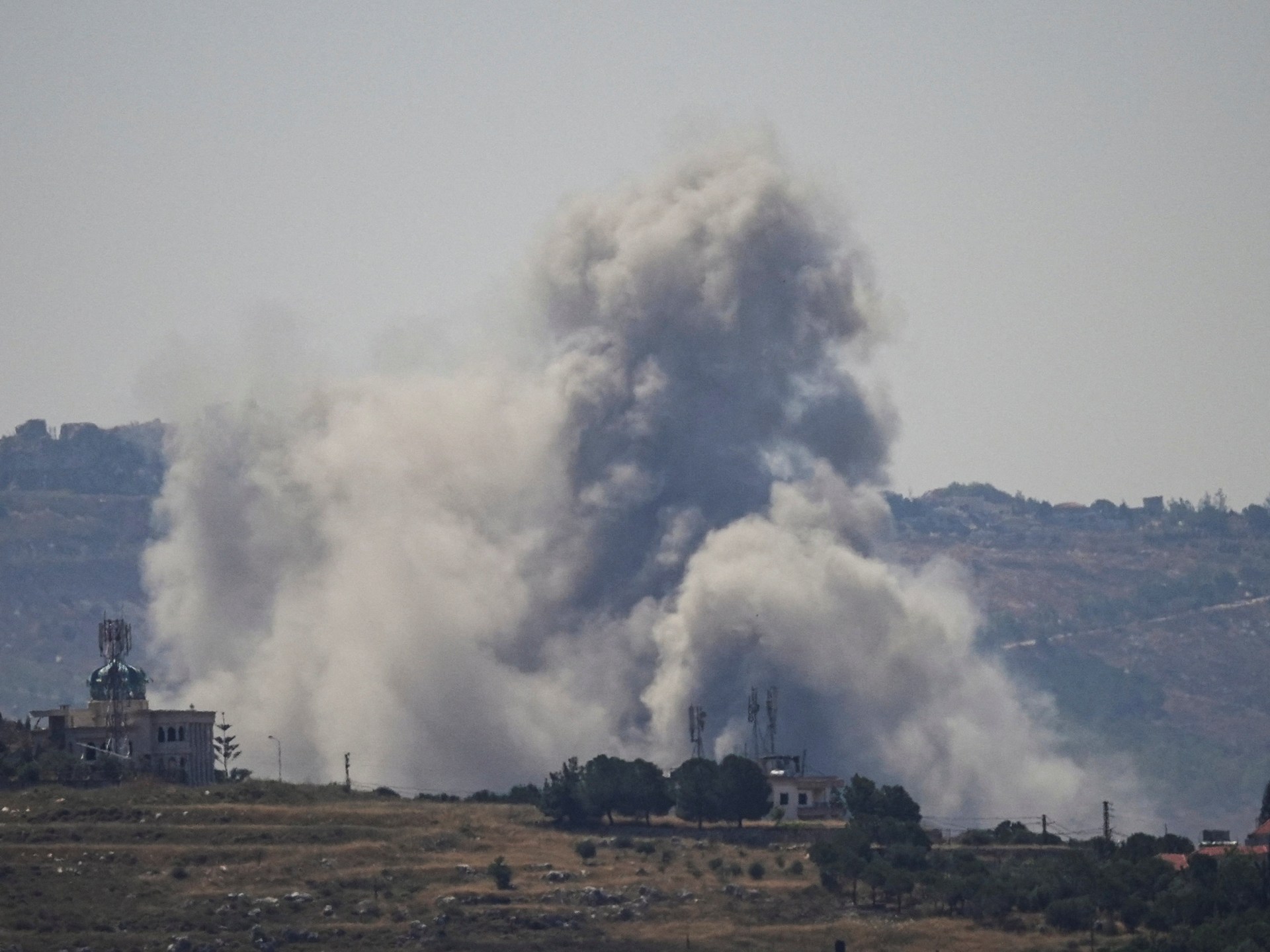
xwhatsapp-strokecopylinkgoogleAdd Al Jazeera on GoogleinfoSmoke billows from southern Lebanon, following Israeli attacks, as seen from Nabatieh, June 8, 2026 [Reuters]By Justin SalhaniPublished On 9 Jun 20269 Jun 2026Beirut, Lebanon – Tuesday marks 100 days since the beginning of Israel’s second military intensification against Lebanon in less than two years.
Over the last 100 days, Israeli forces have destroyed dozens of villages in southern Lebanon. Israel and Lebanon have engaged in rounds of direct diplomatic talks for the first time in decades, but multiple efforts to fully implement a ceasefire have fallen by the wayside.
As Israel’s latest war on Lebanon marks 100 days, efforts are still under way to end the fighting on multiple fronts. In addition to direct talks between Israel and Lebanon, Iran has pledged to link the conflict to any ceasefire deal it makes with the United States and Israel. On Sunday, Iran attacked Israel as retaliation for an attack on Beirut’s southern suburbs, which Tehran considers a red line.
Still, fighting continues in the south between Israeli troops and Hezbollah, the pro-Iran political and paramilitary group that is opposed to the Lebanese government’s direct talks with Israel. Hezbollah has recently started using fibre-optic drones in the fight, which has led to a new dynamic on the battlefield.
“They’ve gone back to their guerrilla roots,” Nicholas Blanford, a nonresident fellow at the Atlantic Council and author of a book on Hezbollah, told Al Jazeera. “The intention now, like back in the 1990s, is to wear the Israelis down. They have to keep overcoming whatever defensive and offensive measures the Israelis bring to bear in the south so that they can keep killing and wounding Israeli soldiers.”
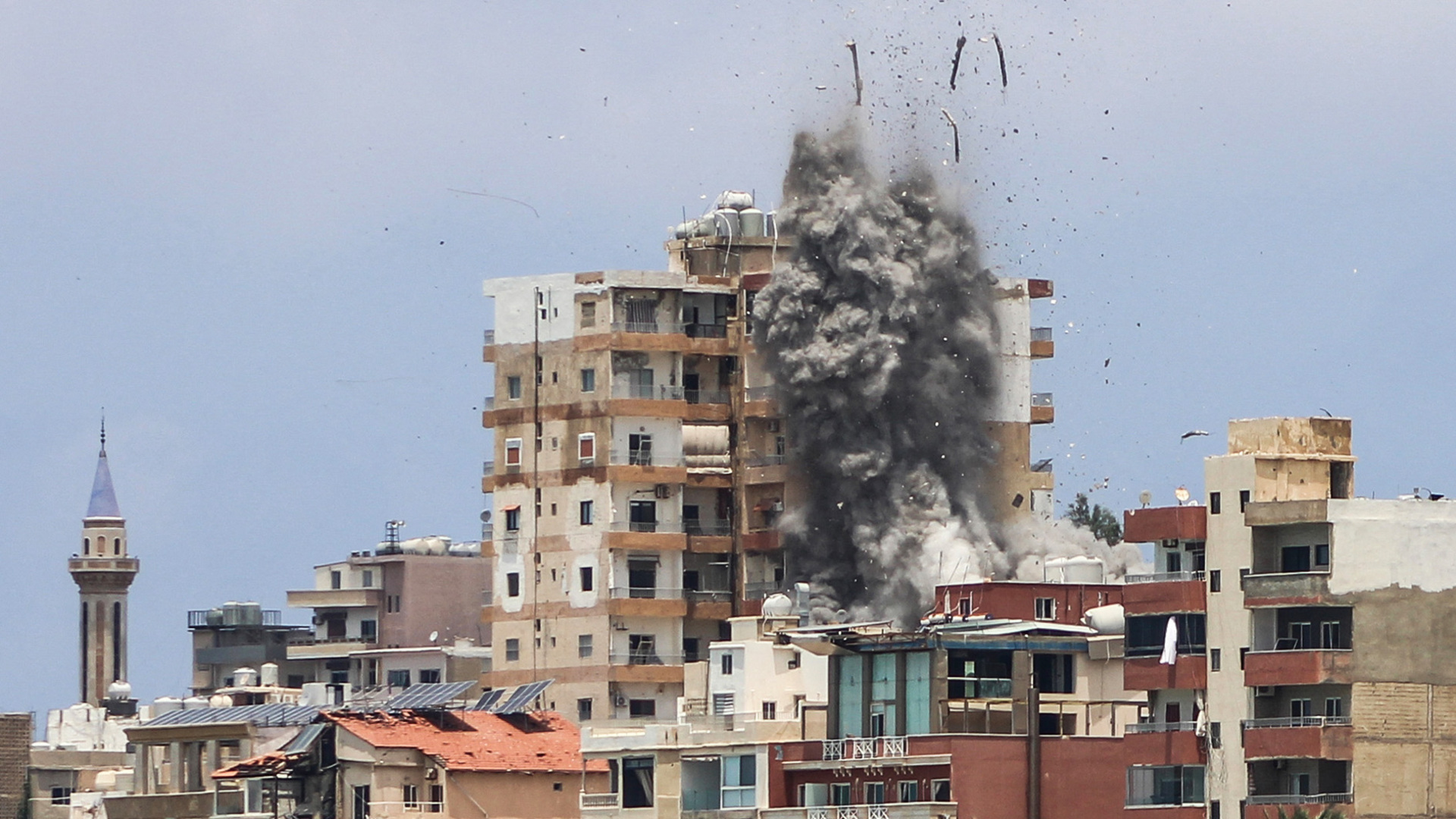
Israel has not slackened the intensity of its attacks in southern Lebanon. Even on the 100th day of the latest round of the war, it continued the pattern of forcibly displacing Lebanese, issuing a threat in the southern coastal city of Tyre, including its portside Christian quarter, which had not been threatened previously. At least eight people were killed in an air raid on a residential area in the city.
Israel also continued attacking areas across southern Lebanon.
Israel’s intensification of its war on Lebanon began on March 2, shortly after Hezbollah fired six rockets at Israel. It was Hezbollah’s first response to Israeli aggression in more than a year. The group said it had responded because of Israel’s continued ceasefire violations, with continued attacks on Lebanon despite the 2024 agreement, and because of the killing of Iran’s Supreme Leader Ayatollah Ali Khamenei just two days earlier, at the start of the US-Israel war on Iran.
Since then, Israel has killed more than 3,600 people in Lebanon, according to the country’s Ministry of Public Health, including at least 245 children. Another 11,000 people have been wounded in Israeli attacks, among them at least 900 children.
Among the dead are many civilians. At least 131 paramedics have been killed, including some in double- or triple-tap strikes, and 17 hospitals have been damaged and three fully closed.
Journalists have also been targeted in the last 100 days.
Meanwhile, the Lebanese government is trying to impose its authority, and is under pressure from the US and Israel to crack down on Hezbollah, which has long been a powerful force in Lebanon. On March 2, the Lebanese government declared Hezbollah’s military activities illegal, though it has had little impact on the group’s operational capabilities to date.
Hezbollah’s main benefactor, Iran, has also tried to tie Lebanon to any ceasefire agreement between itself and Israel and the US. Meanwhile, the Lebanese government has continued talks and seemingly tied its reputation to its trust in US President Donald Trump.
“I have no other choice. I’m trying to benefit from President Trump’s personal interest in ending this conflict,” Lebanon’s President Joseph Aoun said in a recent interview. “It’s very difficult, but we are committed to it. We have no other choice. So, we’re counting on President Trump and his team to make a breakthrough.”
Much like the previous 66-day military intensification in late 2024, Israel has again forced large numbers of Lebanese to flee. Since March 2, at least 1.2 million people have been forcibly displaced from their homes in southern Lebanon, eastern Lebanon’s Bekaa Valley and Beirut’s southern suburbs. Many of them have been displaced more than once.
Israel’s military has also driven deeper into Lebanese territory – occupying about 2,000sq km (770sq miles) – than at any point since it occupied south Lebanon in 2000. Israel last invaded Lebanon in October 2024, but after a ceasefire was agreed upon a month later, the troops pulled out of Lebanon, except for five locations on the border.
“In October and November 2024, the Israelis were very focused on limited goals,” Atlantic Council’s Blanford said. “They came in cautiously, mainly on foot with special forces units.”
This time, however, analysts believe Israel is not planning on withdrawing.
“They’ve come in with much larger numbers, bringing tanks, armoured personnel carriers and bulldozers. They’re destroying a much larger area of south Lebanon, and unlike previously, this time they’re planning to stay indefinitely,” Blanford said.
Israeli officials have already said as much. Israel’s Defence Minister Israel Katz has said his troops will occupy up to the Litani River, which runs across southern Lebanon. Meanwhile, Finance Minister Bezalel Smotrich has called for the annexation of southern Lebanon and the declaration of the Litani as Israel’s new northern border.
Beirut has been spared the continuous Israeli attacks faced by southern Lebanon, though Israel did attack the Lebanese capital’s southern suburbs as recently as Sunday and continues to threaten the city.
But it has faced deadly days. April 8 was one of the bloodiest days of the last 100, as Israel launched operation “Eternal Darkness”, which killed more than 350 people in more than 100 attacks in less than 10 minutes. Israel claimed it was going after Hezbollah targets and infrastructure, though experts, including from the United Nations, called the attacks “indiscriminate”.
The attacks on April 8 led to an international outcry. The day became known in Lebanon as Black Wednesday. A little more than a week later, on April 16, Trump declared a ceasefire between Lebanon and Israel, though Israel continued attacking southern Lebanon and Hezbollah continued to fire back.
If anything, analysts say the fighting intensity in southern Lebanon has increased since April 16. Another ceasefire was announced after the latest round of Lebanon-Israel direct negotiations on June 3, but Hezbollah rejected it outright while Israeli forces remain in Lebanon. For its part, Israel has never stopped attacking.
Hezbollah’s secretary-general Naim Qassem labelled the agreement “shameless”. He called it a “roadmap to annihilate part of the Lebanese people”.