"Both parties claim" to want to "preserve the middle class," note Stephen J. Rose & Scott Winship at The New York Times. But far better if it shrinks as "everyone gets richer." REUTERS See more of our coverage in your search results.
Add The New York Post on Google Economists: Everyone’s Getting Richer “Both parties claim” to want to “preserve the middle class,” note Stephen J. Rose & Scott Winship at The New York Times. But far better if it shrinks as “everyone gets richer.” That’s what their research shows has happened this last half-century: “The ‘core’ middle class shrank, but so did” the poor, near-poor and lower middle class. That is, “the traditional middle class shrank because so many families became better off.” Yes, this is “at odds with popular views of the economy” and the politics of issues like “affordability,” but polling tells us feelings about personal finances don’t change much when the national mood toward the economy changes. People reset expectations as they grow wealthier: “We always want more,” however much we have.
“One of America’s most acute social and economic problems is a retreat from work, especially among prime-age men,” laments The Wall Street Journal Editorial Board — so it’s “good news that four million Americans have left food stamps over the past year.” Enrollment soared “during the pandemic” yet failed to recede when that “emergency ended years ago.” Then Congress expanded work requirements to “stop subsidizing” the indolent — “the correct moral and fiscal policy.” States have little “incentive to police the program since the feds pay the bills,” so “welfare programs have become permanent entitlements” that degrade the “work ethic and breed a culture of dependency on government.” This shift on food stamps is a win “that never would have happened if today’s Democrats were in power.”
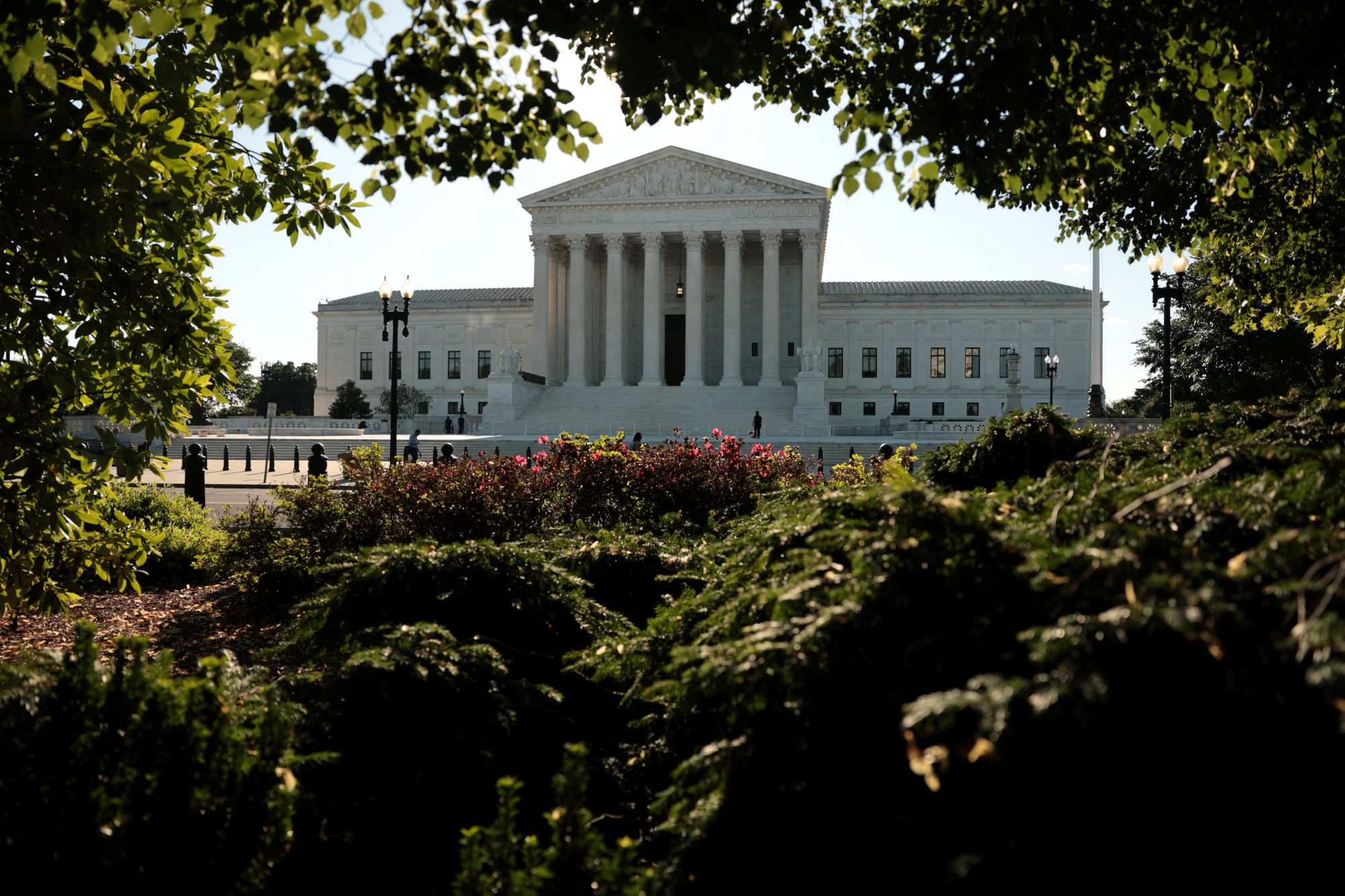
Democrats and their media allies show “profound” “intellectual dishonesty” when they claim the Supreme Court’s “response to Virginia’s redrawn congressional map, which favored Democrats, and Alabama’s redrawn map, which favors Republicans, as proof that the court’s conservative majority is bought and paid for by Republican donors,” thunders Becket Adams at The Hill. In one case, the justices “declined to intervene after Virginia’s Supreme Court rejected a new and heavily gerrymandered” map as imposed contrary to the state’s constitution. In the other, they let Alabama use a map this year while federal litigation over it continues, as forcing a new map would prejudge that case. The attacks on the court here are not for a failure of “rule of law or good social order,” but because Dems have lost influence over a branch they “controlled for decades.”
Jill Biden’s new memoir only offers a “shimmer” of what she “thinks about the Democratic Party shanking her husband” and the claim “shared by many journalists that they were duped” about “President Biden’s obvious decline,” observes Caitlin Flanagan at The Free Press. People who’d been paying attention, however, didn’t experience Biden’s terrible debate appearance as “catastrophic,” but as a “representative example of how he regularly performed.” It is bad faith that Jill Biden is “the person now getting blamed for this mess” by the Democrats and the press, since it’s not “a wife’s job” to “keep careful records” on the “decline” of her husband. “It was the partisan press” and the “fantastically incompetent” DNC who failed in facing “Biden’s cognitive decline.”
At last universities are “showing some backbone” against “militant and performative activism by students” who cancel commencement speakers, cheers Paul du Quenoy at City Journal. Rather than submit to cancel culture, “more colleges seem to be deciding that a speaker’s accomplishments are what should matter.” New York University, the University of Arizona and Morehouse School of Medicine this year all stood firm. Facing down “angry students” who found prof Jonathan Haidt “deeply unsettling,” NYU prez Linda Mills “proudly introduced Haidt,” he “delivered his remarks in full — and neither the world nor NYU came to an end.” “Showing some backbone is increasingly the wise choice” as schools face the “long-predicted ‘enrollment cliff’ of fewer students and lower revenues.”