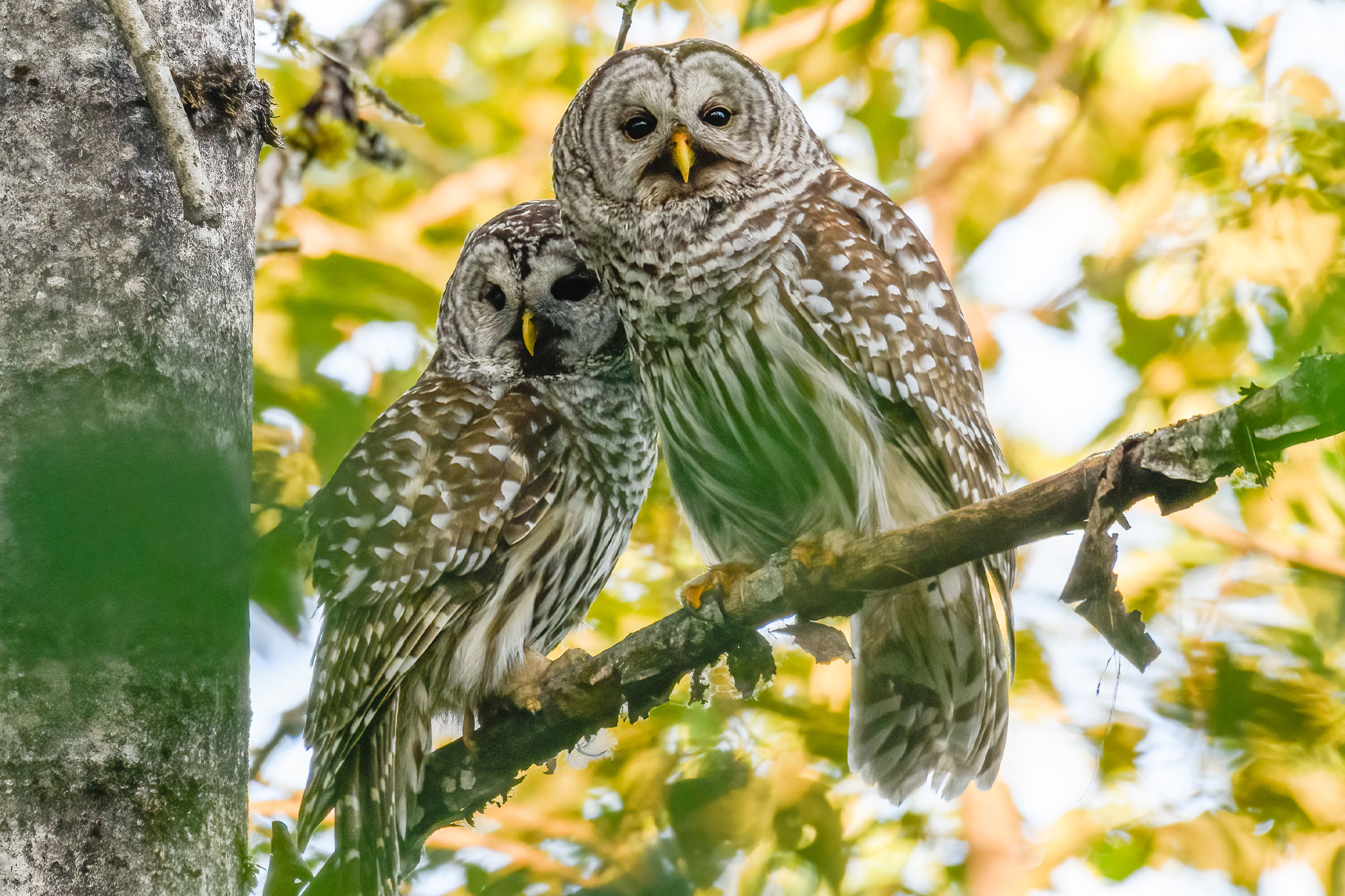
Add The California Post on Google The barred owl is set to be culled across the West Coast in the coming years after attacking hikers and driving a threatened rival species towards extinction.
The larger, more aggressive species is outcompeting endangered northern spotted owls and California spotted owls for territory and nesting sites, according to The News Tribune.
The killings are already underway in Washington state. The Yakama Nation has reportedly begun barred owl management on reservation lands and is currently the first and only group in Washington actively carrying out the cull.
Under the federal plan, trained professionals licensed by state and federal wildlife agencies use recorded owl calls to lure barred owls within range before shooting them with shotguns. Some birds may also be captured and euthanized. The removals are not open to the public.
The U.S. Fish and Wildlife Service finalized the barred owl management plan in 2024 after years of concern over declining spotted owl populations.
The strategy could allow tens of thousands of barred owls to be removed annually across parts of the West for up to 30 years.
Federal wildlife officials argue the action is necessary to protect northern spotted owls, which are listed as threatened under the Endangered Species Act.
The Washington Department of Fish and Wildlife reported in 2024 that northern spotted owl populations had declined by as much as 90% in some federal landscapes across the state, with barred owls identified as a major contributor.
Supporters of the plan say barred owls are overwhelming their smaller cousins.
“Barred owls outcompete spotted owls and are driving the species to extinction,” Tom Wheeler, executive director of the Environmental Protection Information Center, told Outside Magazine last year.
But the cull has drawn fierce criticism from animal-rights advocates who argue the birds are being punished for a natural expansion of their range.
Barred owls historically lived in eastern North America, from Maine to Florida, but have gradually spread westward over the last century. The first barred owl documented in Washington was recorded in 1965.
Wayne Pacelle, president of Animal Wellness Action, told The News Tribune that the species should not be treated like invasive animals introduced by humans.
“All species are range-expanding,” Pacelle said. “And birds have greater range expansion potential because they fly. Moving from the Dakotas to Washington state is not that far.”
Pacelle also questioned whether the decades-long removal effort can succeed, arguing that younger barred owls will simply move into areas where birds have been killed.
“If you shoot barred owls out of a particular area,” he told the outlet, “you will have the juveniles move in and take it back over. So it’ll just be a treadmill.”
The dispute has also reopened old battles over logging and old-growth forests.
Pacelle argues habitat loss played a major role in the spotted owl’s decline and claims the owl-removal program could ultimately be used to justify increased timber harvesting.
“It’s that this is going to be a new age of the cutting down our old-growth forests,” he explained.
Opponents of the plan recently asked a federal court in Portland to throw it out, arguing wildlife officials should not be authorizing what they describe as the mass killing of a species that had been protected under the Migratory Bird Treaty Act for more than a century.
For now, the program continues to target barred owls as wildlife officials race to save another owl species from disappearing forever.