Roll of Honor



Incident
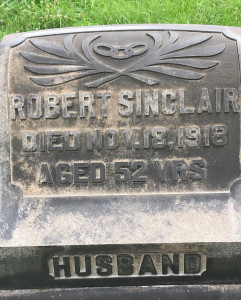
Patrolman Robert Sinclair contracted influenza while performing his assigned job duties during the Spanish Influenza Pandemic of 1918.
The Pittsburgh Bureau of Police patrolmen had been ordered to enforce health laws, rules, and regulations put in place by the Director of the Department of Public Safety and the Acting Commissioner of Health to help stop the spread of influenza, as well as perform their regular police duties. During the Influenza Pandemic, police wagons were used to transport victims to and from the hospital when city ambulances became overwhelmed due to the number of victims. In October 1918, during the highest point of influenza and the deadliest week in the city, the hospital facilities were overwhelmed, with six ambulances out of commission, and only six working ambulances to answer calls in the city. The Director of the Department of Public Safety agreed with neighboring towns to use three ambulances and was granted permission to use two police wagons steadily.
The first reported case of influenza in Pittsburgh was on October 1, 1918, and the first death was reported on October 5, 1918. The city of Pittsburgh had the highest death rate per capita in the United States, averaging 807 deaths per 100,000 people. More than 23,000 cases of influenza were reported in the city, and more than 5,000 deaths. During the worst days, one Pittsburgher fell ill every 70 seconds, and someone died every 10 minutes.
Patrolman Sinclair served with the Pittsburgh Bureau of Police for 10 years, assigned to the Number 6 Police Station on Frankstown Avenue and Everett Street (present-day East Liberty Avenue), the present-day Zone 5 Police Station in Highland Park.
The 1918 Influenza Pandemic
Patrolman Robert Sinclair died on November 18, 1918 of influenza contracted in the line of duty. He was 52.
He is one of 201 officers honored here, and one of 9 at Pittsburgh Bureau of Police.
The influenza pandemic of 1918 killed more people worldwide than the war that preceded it. Police officers worked it without vaccines, without antibiotics, and often without masks, enforcing quarantines, transporting the sick, and standing posts in cities where the dead outpaced the undertakers.
They caught it doing the job. There was no treatment to give them.
Survivors
He was survived by his wife.
In Our Keeping
- Permanent identifier
BO-US-PA-21A4E8B2- Stewardship
- Maintained by NeuraWeb Global Inc.
- Added to badge.nw
- April 2, 2026
- Last updated
- July 23, 2026
Honored here by 1 sentinel - 1 tribute.
Are you family? This record can be claimed and maintained by those who knew Robert. Claim this record.
This page is permanent and free. No fee to view it, no advertising, no tracking, and no account required. It will not be taken down.
Tributes
No vaccine, no antibiotics, and you stood the post anyway.
Patrolman Sinclair gave the Pittsburgh Bureau of Police 16 years.
Thank you for your service. Gone but never to be forgotten.
Rest easy, Patrolman Sinclair.
— S. Vincent Anthony, U.S. Army 1985-1993
Agency
Service Record
Incident Details
Patrolman Robert Sinclair is one of 2,974 officers lost to illness connected to their service across the full record of this memorial — 9.1% of all 32,508 officers honored here.
In PA, 121 of 1,261 officers were lost to illness connected to their service — 9.6% of this state's fallen. That is 0.5 percentage points above the national rate of 9.1%.
At Pittsburgh Bureau of Police, 13 of 101 officers on record were lost to illness connected to their service — 12.9% of this agency's fallen.
National Cause Distribution
How Illness compares to all causes of officer death in the memorial record. Robert Sinclair's cause is highlighted.
How Robert Sinclair Compares
When Illness Deaths Occur
Monthly distribution of Illness deaths across the full memorial record. Robert Sinclair is highlighted in Nov.
Incident Location
Others Who Wore This Badge
100 officers from Pittsburgh Bureau of Police are honored on badge.nw. Showing the 16 most recent.